English
 Español
 tiếng việt
 русский
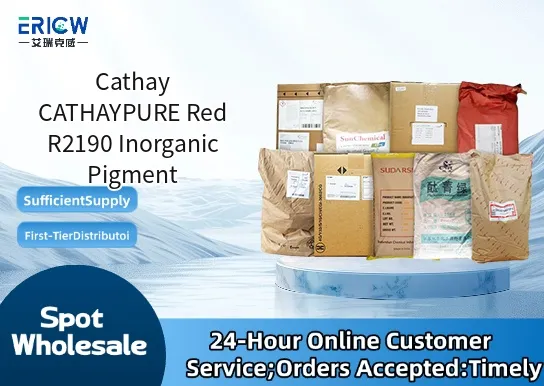
High thermal stability up to 800 °C, suitable for high-temperature ceramic and enamel applications.
Excellent lightfastness and weather resistance, maintaining color integrity under prolonged UV exposure.
Non-toxic composition compliant with global regulatory standards including EN 71-3 and RoHS.
Consistent particle size distribution ensuring uniform dispersion and optimal color development.
Chemically inert in alkaline and mildly acidic environments, enhancing compatibility with diverse binder systems.
Ceramic glazes and underglaze decorations for tableware and architectural tiles.
High-performance enamel coatings for household appliances and industrial metal substrates.
Colorants in refractory materials including furnace linings and kiln furniture.
Pigmentation of glass frits and low-melting-point specialty glasses.
Functional fillers in heat-resistant plastics and polymer composites requiring stable red hue retention.
| Chemical Type | Mixed-metal oxide (Fe–Cr–Al spinel-based) |
| Product Form | Fine dry powder |
| Appearance | Brilliant reddish-brown free-flowing powder |
| Primary Applications | Ceramics, enamels, refractories, glass |
| Key Features | Thermal stability, non-toxicity, UV resistance, acid/alkali tolerance |
| Specific Surface Area (BET) | 8–12 m²/g |
| LOI (Loss on Ignition, 1000 °C) | <1.5 wt% |
| Heavy Metals Content | Compliant with EU Directive 2009/48/EC (Toy Safety) |
Q1: What is the primary chemical composition of Cathay CATHAYPURE Red R2190?
A: Cathay CATHAYPURE Red R2190 is an iron oxide-based inorganic pigment, primarily composed of hematite (α-Fe₂O₃), engineered for high chroma, thermal stability, and consistent particle morphology.
Q2: Is this pigment suitable for use in food-contact plastics or packaging applications?
A: Cathay CATHAYPURE Red R2190 is designed for general industrial applications and complies with common regulatory frameworks for inorganic pigments. For food-contact use, final compliance must be verified by the formulator based on applicable regional regulations and full system testing.
Q3: How does R2190 perform under high-temperature processing conditions?
A: As a thermally stable inorganic oxide pigment, R2190 maintains its color integrity and structural integrity during standard polymer processing—including injection molding, extrusion, and compounding—at temperatures up to approximately 350 °C, depending on residence time and atmosphere.
Q4: What dispersion methods are recommended for optimal performance in polymer systems?
A: For best results, pre-dispersion using high-shear mixing or twin-screw compounding is recommended. The pigment responds well to conventional dispersing aids and carrier resins, and typically achieves uniform distribution at low concentrations in both crystalline and amorphous thermoplastics.
Contact With Us:
E-mail: wangxingqiang@ericwchem.com
Have a Questions? Call Us:
Add:
Building A1, Jiete Industrial Park, Huangpu District, Guangzhou City, Guangdong Province, China