English
 Español
 tiếng việt
 русский
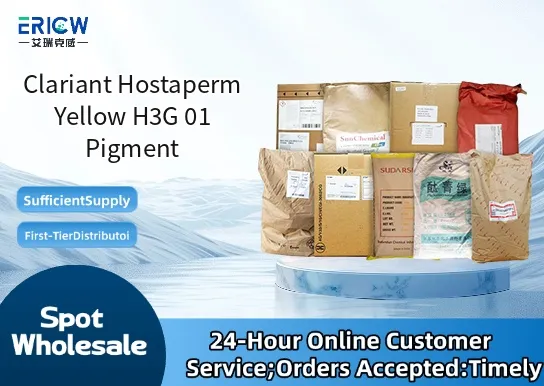
High chroma yellow shade with excellent lightfastness and weather resistance.
Outstanding thermal stability suitable for high-temperature processing up to 280 °C.
Good dispersibility in both polar and non-polar polymer systems.
Low volatility and minimal extractables, meeting stringent regulatory requirements for packaging applications.
Consistent batch-to-batch color reproducibility and high tinctorial strength.
Polyolefin masterbatches (PP, PE) for automotive interior components.
Engineering plastics including ABS, PS, and PC for consumer electronics housings.
Food-contact compliant plastic packaging films and containers.
Industrial coatings requiring durable exterior color performance.
High-performance wire and cable jacketing compounds.
| Chemical Type | Disazo pigment (C.I. Pigment Yellow 12) |
| Product Form | Fine powder |
| Appearance | Yellow to orange-yellow free-flowing powder |
| Primary Applications | Polyolefins, engineering plastics, coatings |
| Key Features | High heat stability, low migration, excellent lightfastness |
| Benefits | Color consistency, regulatory compliance (EU No. 10/2011, FDA 21 CFR) |
| Particle Size (D50) | 0.08–0.12 µm (by laser diffraction) |
| Volatile Matter (105 °C, 2 h) | ≤ 0.5 wt% |
Q1: What is the primary chemical class of Hostaperm Yellow H3G 01?
A: Hostaperm Yellow H3G 01 is a high-performance perylene-based organic pigment, known for its excellent lightfastness, thermal stability, and resistance to migration in demanding polymer systems.
Q2: Is this pigment suitable for food-contact plastics?
A: Hostaperm Yellow H3G 01 is not pre-approved for direct food-contact applications under major global regulatory frameworks. Its use in food-contact polymers requires full formulation-level compliance assessment by the end user, including extraction testing and regulatory review per applicable jurisdiction.
Q3: Which polymer systems show optimal performance with this pigment?
A: This pigment delivers outstanding dispersion stability and color strength in engineering thermoplastics such as polyamide (PA), polybutylene terephthalate (PBT), and polyphenylene sulfide (PPS), especially under high-temperature processing conditions.
Q4: How does Hostaperm Yellow H3G 01 compare to conventional diarylide yellows in terms of heat stability?
A: Unlike many diarylide yellow pigments, Hostaperm Yellow H3G 01 exhibits significantly higher thermal stability—remaining stable during melt processing of engineering plastics above 280 °C without noticeable color shift or decomposition.
Q5: What is the typical dosage range when using this pigment in polymer masterbatches?
A: Dosage depends on the target shade depth and polymer matrix, but it is typically used at low concentrations—generally ranging from 0.1% to 2% by weight in masterbatch formulations—to achieve strong, clean yellow hues with excellent opacity and durability.
Contact With Us:
E-mail: wangxingqiang@ericwchem.com
Have a Questions? Call Us:
Add:
Building A1, Jiete Industrial Park, Huangpu District, Guangzhou City, Guangdong Province, China