English
 Español
 tiếng việt
 русский
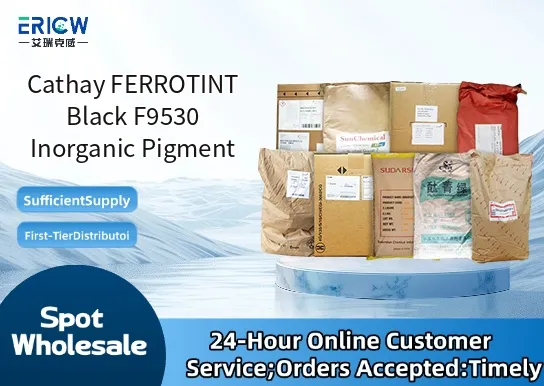
Highly stable iron oxide-based black pigment with excellent thermal stability up to 300°C.
Non-toxic, heavy-metal-free formulation compliant with global regulatory standards including REACH and RoHS.
Superior lightfastness and weather resistance, maintaining color integrity under prolonged UV exposure.
Consistent particle size distribution ensuring uniform dispersion and optimal opacity in demanding matrices.
Low oil absorption for efficient wetting and improved formulation efficiency in high-solids systems.
Architectural and industrial coatings requiring durable, non-fading black coloration.
Plastic coloration for automotive interior components and outdoor polymer products.
Ceramic glazes and underglaze decorations where high-temperature stability is critical.
Concrete and cementitious products including precast elements and architectural façade panels.
Inks for packaging and industrial labeling requiring chemical resistance and outdoor durability.
| Chemical Type | Iron oxide (Fe₃O₄ / γ-Fe₂O₃ blend) |
| Product Form | Free-flowing dry powder |
| Appearance | Jet-black granular powder |
| Primary Applications | Coatings, plastics, ceramics, construction materials |
| Key Features | Thermal stability, UV resistance, low volatility, pH-neutral |
| Benefits | Color consistency, easy dispersibility, regulatory compliance |
| Storage Conditions | Store in cool, dry place; protect from moisture and direct sunlight |
| Shelf Life | 24 months from date of manufacture under recommended conditions |
Q1: What is the primary chemical composition of Cathay FERROTINT Black F9530?
A: Cathay FERROTINT Black F9530 is an inorganic black pigment based on a complex iron oxide–manganese oxide spinel structure, engineered for high thermal stability and chemical inertness in demanding industrial applications.
Q2: Is this pigment suitable for use in high-temperature polymer processing, such as polypropylene or engineering thermoplastics?
A: Yes — F9530 exhibits excellent thermal stability and retains its color integrity during melt processing of polyolefins, polyesters, and other engineering thermoplastics at temperatures up to 300 °C, with minimal risk of blooming or discoloration.
Q3: How does F9530 compare to carbon black in terms of UV resistance and weathering performance?
A: Unlike organic or carbon-based blacks, F9530 offers inherently superior UV stability and resistance to photochemical degradation due to its fully inorganic nature, making it well-suited for long-term outdoor applications where color retention is critical.
Q4: Can F9530 be used in food-contact plastics or coatings?
A: While F9530 complies with general safety requirements for inorganic pigments in non-active food packaging, final regulatory compliance depends on the full formulation, intended application, and applicable regional regulations — users must conduct their own due diligence and validation.
Q5: What dispersion methods are recommended for optimal color development and stability in liquid systems?
A: For liquid coatings and inks, high-shear mixing or bead milling is recommended to achieve full deagglomeration; compatibility with common dispersants and wetting agents should be verified empirically, as performance varies with resin chemistry and solvent polarity.
Contact With Us:
E-mail: wangxingqiang@ericwchem.com
Have a Questions? Call Us:
Add:
Building A1, Jiete Industrial Park, Huangpu District, Guangzhou City, Guangdong Province, China