English
 Español
 tiếng việt
 русский
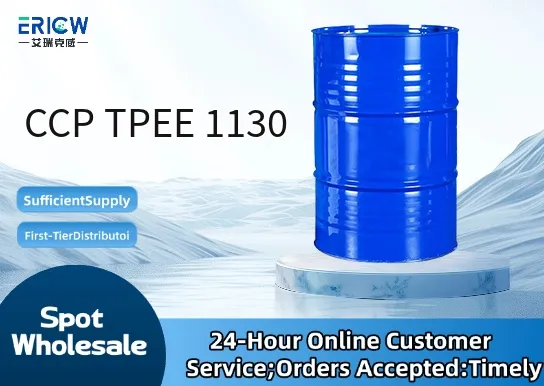
Excellent balance of thermoplastic processability and elastomeric performance.
High tensile strength and superior resilience at elevated temperatures.
Outstanding resistance to oils, greases, and common industrial chemicals.
Good low-temperature flexibility down to –40 °C.
Easy to process via injection molding, extrusion, and blow molding without drying.
Automotive under-hood components including air ducts and sensor housings.
Industrial fluid handling parts such as pneumatic tubing and connector seals.
Consumer electronics casings requiring impact resistance and dimensional stability.
Power tool grips and ergonomic handles demanding long-term fatigue resistance.
Medical device components compatible with steam sterilization cycles.
| Chemical Type | Thermoplastic Polyester Elastomer (TPEE) |
| Product Form | Pellets |
| Appearance | Off-white to light beige, uniform cylindrical pellets |
| Density | 1.21 g/cm³ (ASTM D792) |
| Melt Flow Rate (230 °C / 2.16 kg) | 15–18 g/10 min |
| Tensile Strength (ASTM D412) | 32 MPa |
| Elongation at Break (ASTM D412) | 450 % |
| Hardness (Shore D) | 38 |
Q1: What is the primary functional role of CCP TPEE 1130 in polymer blends?
A: CCP TPEE 1130 is a thermoplastic elastomer based on polyether-ester chemistry, primarily used as a toughening modifier and impact enhancer in engineering thermoplastics such as polyesters, polyamides, and polycarbonates. It improves low-temperature flexibility and melt processability without significantly compromising thermal stability or tensile strength.
Q2: Is CCP TPEE 1130 suitable for applications requiring repeated flexing or dynamic mechanical stress?
A: Yes — its inherent phase-separated morphology provides excellent resilience, fatigue resistance, and recovery after deformation, making it well-suited for components subject to cyclic loading, such as seals, gaskets, flexible couplings, and overmolded grips.
Q3: How should CCP TPEE 1130 be dried prior to processing?
A: Like most hygroscopic thermoplastic elastomers, CCP TPEE 1130 should be thoroughly dried before melt processing. A typical recommendation is drying at 80–100 °C for 2–4 hours using a dehumidifying hopper dryer; insufficient drying may lead to surface defects or reduced mechanical performance during extrusion or injection molding.
Q4: Can CCP TPEE 1130 be processed on standard thermoplastic equipment?
A: Yes — it is fully compatible with conventional thermoplastic processing methods including injection molding, extrusion, and blow molding. No special tooling or machine modifications are required, though optimized screw design and temperature profiling are recommended to maintain its elastic integrity and minimize thermal degradation.
Contact With Us:
E-mail: wangxingqiang@ericwchem.com
Have a Questions? Call Us:
Add:
Building A1, Jiete Industrial Park, Huangpu District, Guangzhou City, Guangdong Province, China