English
 Español
 tiếng việt
 русский
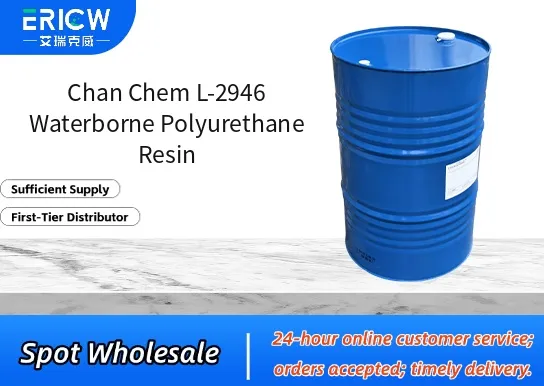
Low-VOC, environmentally compliant formulation meeting global regulatory standards for waterborne coatings.
Excellent film-forming capability with high gloss retention and superior clarity after drying.
Outstanding flexibility and abrasion resistance, ideal for dynamic substrate applications.
Good compatibility with acrylic emulsions and other common waterborne resins for hybrid system design.
Stable viscosity profile across storage temperatures (5–40 °C) with minimal rheological drift over 12 months.
High-performance waterborne wood coatings for furniture and interior joinery.
Leather finishing topcoats requiring soft hand feel and hydrolytic stability.
Flexible packaging laminating adhesives with enhanced heat seal integrity.
Textile coating binders for durable, breathable technical fabrics.
Industrial maintenance coatings for metal substrates requiring corrosion resistance and UV stability.
| Chemical Type | Anionic aliphatic polyurethane dispersion |
| Product Form | White to slightly yellow opaque liquid |
| Appearance | Homogeneous, low-viscosity dispersion |
| Solids Content | 30.0 ± 1.0 wt% |
| pH | 7.8 – 8.5 |
| Viscosity (25 °C, Brookfield RVT, #2 spindle, 20 rpm) | 150 – 350 mPa·s |
| Particle Size (D50) | 80 – 120 nm |
| Minimum Film Formation Temperature (MFFT) | 12 – 15 °C |
Q1: What are the primary application areas for Chan Chem L-2946?
A: Chan Chem L-2946 is widely used in waterborne industrial coatings, including wood finishes, plastic coatings, and flexible packaging laminates where low-VOC, high-gloss, and abrasion-resistant films are required.
Q2: Is L-2946 compatible with common waterborne acrylic or polyester dispersions?
A: Yes, L-2946 demonstrates good compatibility with many standard waterborne acrylic and polyester dispersions, enabling hybrid formulations that balance flexibility, hardness, and film integrity—compatibility testing under actual formulation conditions is recommended.
Q3: How does L-2946 perform in terms of drying speed and film formation at ambient conditions?
A: L-2946 forms continuous, coalesced films at room temperature with moderate drying speed; full physical property development typically occurs within 24–48 hours depending on film thickness, humidity, and air circulation.
Q4: Can L-2946 be crosslinked with external agents to enhance chemical resistance?
A: Yes, L-2946 contains reactive functional groups that allow post-crosslinking with water-dispersible aziridines, carbodiimides, or polyisocyanates—enabling significant improvements in solvent and scratch resistance without compromising waterborne handling benefits.
Q5: Does L-2946 require pH adjustment during formulation?
A: L-2946 is supplied with stabilized pH suitable for most standard formulations; minor pH adjustment may be needed when blending with highly acidic or alkaline components, but aggressive pH shifts should be avoided to maintain colloidal stability.
Contact With Us:
E-mail: wangxingqiang@ericwchem.com
Have a Questions? Call Us:
Add:
Building A1, Jiete Industrial Park, Huangpu District, Guangzhou City, Guangdong Province, China