English
 Español
 tiếng việt
 русский
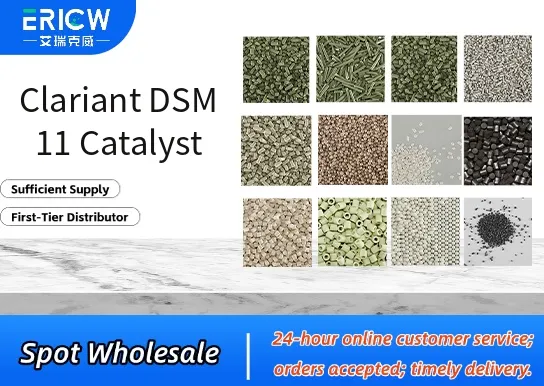
Highly selective hydrogenation catalyst for fine chemical synthesis.
Thermally stable nickel-based formulation with controlled metal dispersion.
Low dust generation and excellent flowability for safe handling in continuous processes.
Reduced heavy metal impurities to meet stringent pharmaceutical intermediate purity requirements.
Consistent batch-to-batch performance validated via rigorous QC testing.
Hydrogenation of nitroarenes to aromatic amines in agrochemical intermediates.
Selective reduction of functionalized alkenes in pharmaceutical API manufacturing.
Catalytic saturation of unsaturated aldehydes in fragrance and flavor precursor synthesis.
Debenzylation reactions under mild H₂ pressure in protected amino acid processing.
| Chemical Type | Nickel on carbon support, promoted formulation |
| Product Form | Free-flowing granular solid |
| Appearance | Gray-black granules |
| Primary Applications | Hydrogenation, deprotection, and selective reduction |
| Key Features | High activity at low H₂ pressure (1–5 bar), ambient to 80 °C operation |
| Benefits | Improved process safety, reduced catalyst loading, simplified work-up |
| Storage Conditions | Under inert atmosphere (N₂), dry and cool environment (<25 °C) |
| Handling Precautions | Use in well-ventilated area; avoid contact with air when wet or freshly reduced |
Q1: What is the primary function of Clariant DSM 11 Catalyst in polymer processing?
A: Clariant DSM 11 Catalyst is a highly active, heterogeneous catalyst designed to accelerate crosslinking reactions—particularly in peroxide-cured elastomers and thermosetting resins—enabling improved scorch safety, enhanced cure efficiency, and better control over vulcanization kinetics.
Q2: Is Clariant DSM 11 Catalyst compatible with food-contact or medical-grade polymer formulations?
A: While Clariant DSM 11 Catalyst is not pre-certified for direct food-contact or implantable medical applications, it may be considered for use in certain regulated systems where final formulation compliance is verified by the compounder—subject to full regulatory assessment, extraction testing, and end-use validation.
Q3: How should Clariant DSM 11 Catalyst be incorporated into a polymer matrix?
A: It is typically introduced during the masterbatch or final mixing stage using standard high-shear compounding equipment. For optimal dispersion and performance, pre-dilution in a carrier resin or oil is recommended—especially when targeting low-concentration dosing.
Q4: Does Clariant DSM 11 Catalyst require special storage or handling conditions?
A: Yes—store in a cool, dry place under inert atmosphere or sealed packaging to prevent moisture uptake and oxidation. Avoid prolonged exposure to ambient humidity or elevated temperatures, as these may affect catalytic activity and shelf life.
Contact With Us:
E-mail: wangxingqiang@ericwchem.com
Have a Questions? Call Us:
Add:
Building A1, Jiete Industrial Park, Huangpu District, Guangzhou City, Guangdong Province, China