English
 Español
 tiếng việt
 русский
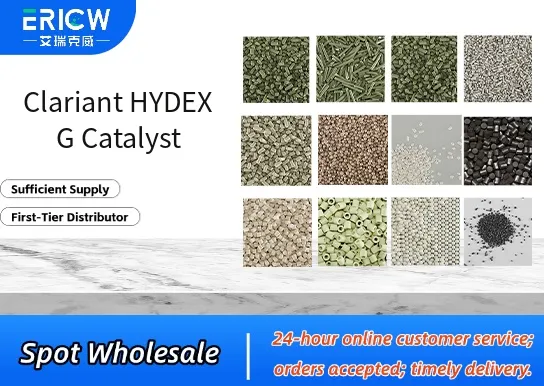
Highly selective for hydrogenation of nitroaromatics to corresponding anilines under mild conditions.
Thermally stable and robust in continuous fixed-bed reactor operations.
Low leaching of active metal components, ensuring long catalyst lifetime and consistent product purity.
Engineered for excellent resistance to common poisons such as sulfur and chlorine compounds.
Available in tailored pellet sizes to optimize pressure drop and mass transfer in industrial-scale reactors.
Production of aromatic amines for agrochemical intermediates.
Synthesis of pharmaceutical building blocks requiring high chemo-selectivity.
Manufacture of dyes and pigments via selective nitro-group reduction.
Hydrogenation step in specialty polymer precursor synthesis.
Continuous-flow processing of fine chemicals in multipurpose plants.
| Chemical Type | Palladium-on-carbon (Pd/C) with proprietary promoter system |
| Product Form | Cylindrical pellets (1.5–2.0 mm diameter) |
| Appearance | Black, free-flowing granular solid |
| Active Metal Content | 5 wt% Pd, nominal |
| Primary Applications | Selective hydrogenation of nitroaromatics |
| Key Features | High activity, low metal sintering, poison tolerance |
| Benefits | Reduced catalyst consumption, minimized downstream purification, improved process safety |
| Storage Condition | Store dry, under inert atmosphere at ambient temperature |
Q1: What is the primary function of HYDEX G Catalyst in polymer processing?
A: HYDEX G Catalyst is a highly active, organometallic compound designed to accelerate crosslinking reactions—particularly in peroxide-cured elastomers and thermoset resins—enhancing cure efficiency, improving scorch safety, and supporting consistent network formation under industrial processing conditions.
Q2: Is HYDEX G Catalyst compatible with common elastomeric systems such as EPDM, silicone, or fluorocarbon rubbers?
A: Yes, HYDEX G Catalyst demonstrates broad compatibility with high-performance elastomers including EPDM, silicone, and fluoroelastomers. Its reactivity profile allows effective integration into both conventional and low-peroxide formulations without compromising thermal stability or final physical properties.
Q3: How should HYDEX G Catalyst be handled and stored to maintain performance?
A: HYDEX G Catalyst is moisture-sensitive and should be stored under inert atmosphere (e.g., nitrogen or argon), in tightly sealed original containers, at cool and dry conditions (typically below 25 °C). Avoid exposure to air, humidity, or direct sunlight prior to use to preserve catalytic activity and shelf life.
Q4: What is the typical dosage range for HYDEX G Catalyst in industrial formulations?
A: Dosage is formulation-dependent but generally ranges from 0.1% to 2% by weight relative to the base polymer or curative system. Optimal loading is determined through small-scale rheometry and cure profiling to balance scorch time, cure rate, and final crosslink density.
Q5: Can HYDEX G Catalyst be used in food-contact or medical-grade elastomer applications?
A: HYDEX G Catalyst is intended for industrial and technical applications. For food-contact or medical-grade uses, final regulatory compliance depends on full formulation assessment—including extraction behavior, end-use conditions, and applicable regional requirements—and must be validated by the compounder or end-user.
Contact With Us:
E-mail: wangxingqiang@ericwchem.com
Have a Questions? Call Us:
Add:
Building A1, Jiete Industrial Park, Huangpu District, Guangzhou City, Guangdong Province, China