English
 Español
 tiếng việt
 русский
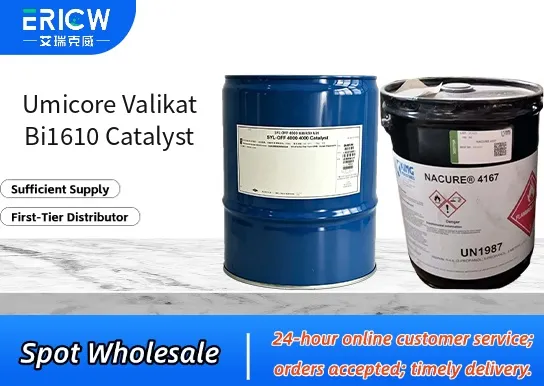
Highly selective bismuth-molybdate-based catalyst optimized for propylene ammoxidation to acrylonitrile.
Exceptional thermal and structural stability under continuous industrial oxidation conditions.
Low dust generation and excellent mechanical strength, ensuring long service life in fixed-bed reactors.
Precisely controlled active phase dispersion for consistent activity and minimized by-product formation.
Designed for seamless integration into existing Valikat® catalyst systems with proven scalability.
Acrylonitrile production via fluidized-bed or multi-tubular fixed-bed ammoxidation of propylene.
Integrated petrochemical complexes requiring high-yield, low-energy acrylonitrile synthesis.
On-purpose acrylonitrile units supporting carbon fiber precursor manufacturing.
Specialty chemical plants upgrading legacy catalysts to meet modern emission and efficiency standards.
| Chemical Type | Bismuth-Molybdate Heterogeneous Catalyst |
| Product Form | Cylindrical pellets (3.0 mm diameter × 3–5 mm length) |
| Appearance | Grayish-black free-flowing granules |
| Primary Applications | Propylene ammoxidation to acrylonitrile |
| Key Features | High selectivity, low ammonia slip, robust redox cycling |
| Benefits | Extended cycle life, reduced catalyst replacement frequency, lower operating costs |
| Storage Conditions | Dry, well-ventilated area; avoid moisture and strong oxidizers |
Q1: What is the primary function of Valikat Bi1610 in polymer processing?
A: Valikat Bi1610 is a bismuth-based catalyst designed to promote efficient transesterification and polycondensation reactions—particularly in the production of polyesters and alkyd resins—offering high activity with reduced volatility and lower toxicity compared to traditional heavy-metal alternatives.
Q2: Is Valikat Bi1610 suitable for food-contact or sensitive consumer applications?
A: Yes—Valikat Bi1610 is formulated to meet evolving regulatory expectations for reduced heavy-metal content. Its bismuth-based chemistry supports compliance strategies for applications where lead-, antimony-, or cobalt-free catalysis is required, including coatings and resins intended for indirect food contact or indoor environments.
Q3: How does Valikat Bi1610 compare to traditional antimony-based catalysts in terms of reaction profile?
A: Valikat Bi1610 typically delivers comparable ester interchange and polycondensation kinetics to antimony trioxide, but with improved thermal stability during melt-phase processing and reduced risk of discoloration—especially in light-colored or transparent polyester systems.
Q4: What are the recommended handling and storage conditions?
A: Store in a cool, dry place under inert atmosphere or sealed packaging to prevent moisture uptake. Handle using standard industrial hygiene practices for fine metal-containing powders—avoid inhalation of dust and ensure adequate ventilation during weighing or dispersion.
Contact With Us:
E-mail: wangxingqiang@ericwchem.com
Have a Questions? Call Us:
Add:
Building A1, Jiete Industrial Park, Huangpu District, Guangzhou City, Guangdong Province, China