English
 Español
 tiếng việt
 русский
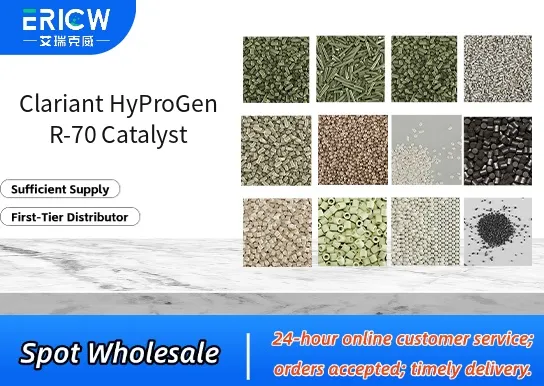
Highly selective palladium-based heterogeneous catalyst optimized for low-temperature cross-coupling reactions.
Thermally stable support matrix enabling consistent performance under extended reaction cycles.
Low residual metal leaching, supporting stringent purity requirements in pharmaceutical intermediate synthesis.
Controlled particle size distribution (D50 ≈ 45–55 µm) ensuring excellent flowability and reactor bed uniformity.
Pre-reduced active phase for immediate catalytic activity without in-situ activation steps.
Carbon–carbon bond formation in API manufacturing, including Suzuki and Heck couplings.
Production of fine chemicals for agrochemical active ingredients.
Synthesis of OLED precursor molecules requiring high chemo- and regioselectivity.
Catalytic hydrogenation of nitroarenes to aromatic amines under mild conditions.
| Chemical Type | Palladium on carbon-supported modified base metal oxide |
| Product Form | Free-flowing granular solid |
| Appearance | Gray to dark gray granules |
| Palladium Content | 1.60 wt% ± 0.15% |
| Moisture Content | < 1.0 wt% |
| Ignition Loss (550 °C) | 18–22% |
| Primary Applications | Cross-coupling, reductive amination, selective hydrogenation |
| Key Features | Low leaching, pre-activated, narrow particle size distribution |
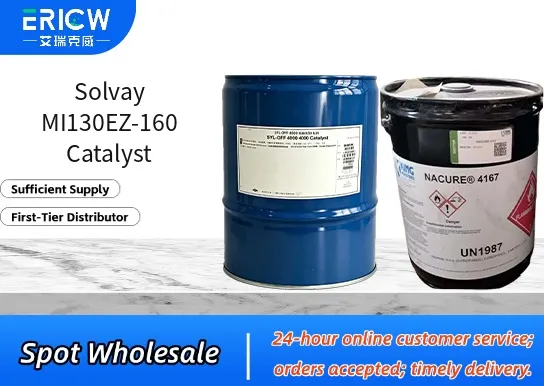
Q1: What is the primary application of Solvay MI130EZ-160 Catalyst?
A: Solvay MI130EZ-160 is a specialized platinum-based catalyst designed for hydrosilylation reactions in high-performance silicone elastomer and RTV (room-temperature vulcanizing) formulations, particularly where low-temperature cure, excellent shelf stability, and minimal side reactions are required.
Q2: How should Solvay MI130EZ-160 be handled and stored to maintain performance?
A: Store under inert atmosphere (e.g., nitrogen or argon) at room temperature in tightly sealed, light-resistant containers. Avoid exposure to moisture, air, and elevated temperatures, as these may reduce catalytic activity or promote premature reaction onset.
Q3: Is Solvay MI130EZ-160 compatible with common silicone polymers and fillers?
A: Yes — it demonstrates broad compatibility with vinyl-functional polydimethylsiloxanes (PDMS), methylhydrosiloxane-dimethylsiloxane copolymers, and standard reinforcing fillers such as fumed silica. Compatibility with specific additives (e.g., inhibitors, adhesion promoters) should be verified experimentally in the target formulation.
Q4: What is the typical dosage range for Solvay MI130EZ-160 in silicone systems?
A: Dosage depends on formulation requirements and desired cure profile, but it is typically used at low concentrations — generally ranging from 0.1% to 2% by weight relative to the base polymer, with most applications falling between 0.3% and 1.0%.
Q5: Does Solvay MI130EZ-160 require thermal activation or can it cure at ambient conditions?
A: It supports both ambient and elevated temperature curing. While effective at room temperature in many RTV systems, accelerated cure kinetics are achieved with mild heating (e.g., 60–100 °C), making it suitable for both low-energy and high-throughput manufacturing processes.
Contact With Us:
E-mail: wangxingqiang@ericwchem.com
Have a Questions? Call Us:
Add:
Building A1, Jiete Industrial Park, Huangpu District, Guangzhou City, Guangdong Province, China