English
 Español
 tiếng việt
 русский
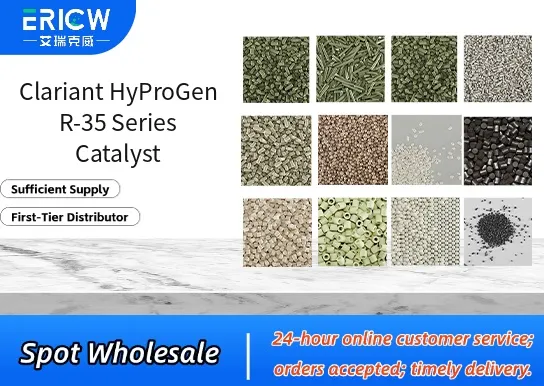
Highly selective hydrogenation catalyst optimized for low-sulfur, low-aromatic reformulated fuels.
Thermally stable nickel-molybdenum formulation with enhanced resistance to sintering under prolonged operation.
Low metal leaching profile ensures extended catalyst life and reduced downstream contamination risk.
Tailored pore structure facilitates efficient diffusion of bulky hydrocarbon molecules in heavy feedstocks.
Pre-sulfided and ready-to-use format minimizes plant start-up time and eliminates on-site sulfiding hazards.
Hydrodesulfurization (HDS) of diesel and gasoil fractions in refinery hydrotreating units.
Hydrodearomatization (HDA) for ultra-low sulfur diesel (ULSD) compliance.
Treatment of cracked feedstocks including FCC cycle oils and coker gasoil.
Co-processing of bio-derived feedstocks in conventional hydrotreaters.
Production of premium base oils requiring deep aromatic saturation.
| Chemical Type | Ni-Mo on high-surface-area alumina support |
| Product Form | Extrudates (1.4–1.6 mm diameter) |
| Appearance | Black cylindrical pellets |
| Primary Applications | Hydrodesulfurization, hydrodearomatization, hydrodenitrogenation |
| Key Features | Pre-sulfided, thermally stable, low dust generation |
| Benefits | Reduced start-up time, improved sulfur removal efficiency, longer cycle length |
| Storage Requirement | Store in dry, well-ventilated area; avoid exposure to moisture and air |
Q1: What is the primary function of the HyProGen R-35 Series in polymer processing?
A: The HyProGen R-35 Series is a heterogeneous hydrogenation catalyst designed to selectively reduce unsaturated bonds—particularly residual double bonds—in thermoplastic elastomers, polyolefins, and related polymers during melt compounding or extrusion. It helps improve thermal stability, color retention, and long-term aging performance without significantly affecting rheology or mechanical properties.
Q2: Is the HyProGen R-35 Series compatible with common polymer processing equipment?
A: Yes—it is formulated for robust performance in standard twin-screw extruders and high-shear melt mixers. Its solid, free-flowing granular form ensures consistent feeding and dispersion, and it exhibits good thermal stability under typical compounding temperatures (180–260 °C), minimizing premature deactivation or volatile byproduct formation.
Q3: How does the R-35 Series differ from earlier generations of Clariant’s HyProGen catalysts?
A: The R-35 Series features an optimized support matrix and metal dispersion profile that enhances hydrogen utilization efficiency and extends catalyst lifetime under continuous processing conditions. It also demonstrates improved resistance to common process contaminants (e.g., trace oxygen, moisture, or polar additives) compared to legacy formulations, supporting more stable batch-to-batch performance.
Q4: What safety and handling precautions should be observed when using this catalyst?
A: As a fine metal-containing powder, HyProGen R-35 requires standard industrial hygiene practices: avoid inhalation of dust, use local exhaust ventilation during handling, and wear appropriate PPE (e.g., N95 respirator, nitrile gloves, safety goggles). It is not classified as spontaneously combustible but should be stored in a cool, dry place away from strong oxidizers. Full safety guidance is provided in the product’s Safety Data Sheet (SDS).
Contact With Us:
E-mail: wangxingqiang@ericwchem.com
Have a Questions? Call Us:
Add:
Building A1, Jiete Industrial Park, Huangpu District, Guangzhou City, Guangdong Province, China