English
 Español
 tiếng việt
 русский
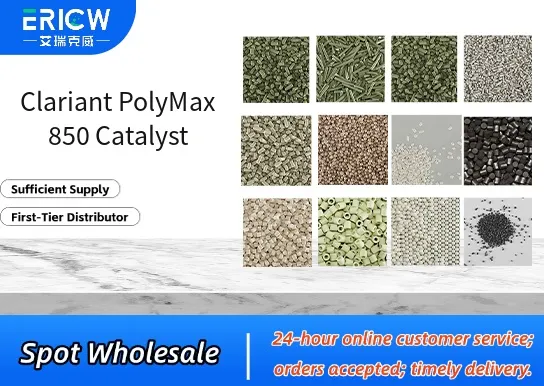
Highly selective propylene production via propane dehydrogenation (PDH) under optimized reaction conditions.
Exceptional thermal and structural stability enabling extended catalyst cycle life and reduced regeneration frequency.
Low coke formation tendency, minimizing downtime and maintaining consistent process efficiency over time.
Tailored metal dispersion and support interaction for enhanced activity and resistance to sintering.
Compatible with industry-standard fixed-bed and moving-bed reactor configurations.
Propane dehydrogenation (PDH) units for on-purpose propylene manufacturing.
Integrated olefins complexes requiring high-purity propylene feedstock.
Chemical plants producing polypropylene, acrylonitrile, and propylene oxide derivatives.
Refinery-based petrochemical expansions targeting propylene yield optimization.
Greenfield and brownfield PDH facilities seeking proven, scalable catalyst technology.
| Chemical Type | Platinum–tin–alumina-based heterogeneous catalyst |
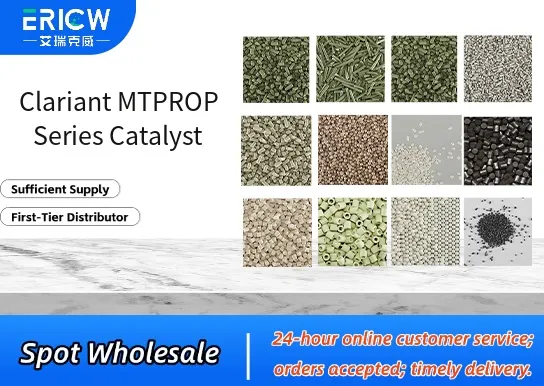
| Product Form | Extruded cylindrical pellets (3 mm diameter × 3–5 mm length) |
| Appearance | Grayish-black free-flowing granules |
| Primary Applications | Propane dehydrogenation (PDH) to propylene |
| Key Features | High selectivity (>90%), low methane byproduct formation, regenerable |
| Benefits | Improved propylene yield, reduced energy consumption per ton of product, lower operating costs |
| Storage Conditions | Dry, inert atmosphere; avoid exposure to moisture and reducing agents |
| Handling Precautions | Use in well-ventilated areas; avoid inhalation of dust; refer to SDS for safety protocols |
Q1: What is the primary function of the Clariant MTPROP Series Catalyst in polymer processing?
A: The MTPROP Series Catalyst is designed to accelerate controlled crosslinking or condensation reactions—particularly in thermosetting resins and reactive polymer systems—enabling improved cure efficiency, enhanced thermal stability, and consistent network formation under standard processing conditions.
Q2: Is the MTPROP Series compatible with common engineering thermoplastics such as polyesters, polyurethanes, or epoxy-based matrices?
A: Yes, the MTPROP Series exhibits broad compatibility with polyester, polyurethane, and epoxy resin systems. Its formulation is engineered to minimize side reactions and maintain process stability across a range of polar and moderately reactive polymer matrices.
Q3: How should the catalyst be incorporated into a formulation?
A: It is typically added during the liquid-phase mixing stage, either directly to the resin component or pre-dispersed in a compatible carrier solvent or monomer. Uniform dispersion is essential, and incorporation should occur under inert atmosphere when processing oxygen-sensitive systems.
Q4: Does the MTPROP Series require special handling or storage conditions?
A: Yes. To preserve catalytic activity and shelf life, it should be stored in tightly sealed containers under dry, cool conditions (typically below 25 °C) and protected from moisture, strong oxidizing agents, and prolonged exposure to ambient light.
Q5: Can the MTPROP Series be used in applications requiring regulatory compliance for indirect food contact?
A: While the MTPROP Series is formulated with high-purity raw materials and low volatility, formal regulatory clearance (e.g., FDA, EFSA) must be verified on a case-by-case basis against the final end-use application, processing parameters, and migration profile. Customers are advised to consult Clariant’s regulatory support team for documentation relevant to their specific use case.
Contact With Us:
E-mail: wangxingqiang@ericwchem.com
Have a Questions? Call Us:
Add:
Building A1, Jiete Industrial Park, Huangpu District, Guangzhou City, Guangdong Province, China