English
 Español
 tiếng việt
 русский
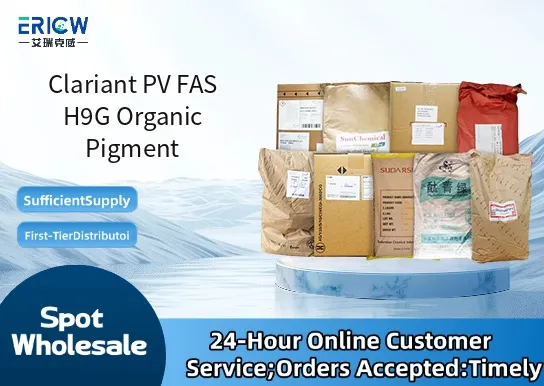
High chroma and excellent color strength in demanding pigmentary applications.
Outstanding thermal stability up to 280 °C, suitable for high-temperature polymer processing.
Excellent lightfastness and weather resistance in outdoor applications.
Good dispersibility in both polar and non-polar polymer matrices.
Compliant with major global regulatory frameworks including REACH and RoHS.
Polyolefin masterbatches (PP, PE) for automotive interior components.
Engineering plastics including polyamide (PA6, PA66) and polycarbonate (PC).
Coatings for industrial and architectural applications requiring long-term color retention.
Plastic packaging films where food-contact compliance and color consistency are critical.
| Chemical Type | Quinacridone derivative |
| Product Form | Fine powder |
| Appearance | Violet-red free-flowing powder |
| Primary Applications | Polyolefins, engineering plastics, coatings |
| Key Features | High thermal stability, excellent lightfastness, good dispersibility |
| Benefits | Consistent batch-to-batch color, low migration, high tinctorial strength |
| Regulatory Status | REACH registered; RoHS compliant; EU PLASTICS Directive compatible |
Q1: What is the primary application area for PV FAS H9G?
A: PV FAS H9G is a high-performance organic pigment specifically developed for demanding plastic coloration applications, particularly in polyolefins and engineering thermoplastics where excellent heat stability, lightfastness, and dispersion behavior are required.
Q2: Is PV FAS H9G suitable for food-contact plastics?
A: PV FAS H9G is designed to meet regulatory expectations for certain food-contact applications in plastics, subject to compliance with applicable regional legislation and final formulation validation. Users must confirm suitability based on their specific processing conditions, polymer matrix, and end-use requirements.
Q3: How does PV FAS H9G perform under high-temperature processing?
A: This pigment exhibits very good thermal stability, enabling robust performance during standard injection molding and extrusion processes of polyolefins and other thermoplastics without significant hue shift or degradation.
Q4: What is the typical dosage range for optimal color strength and dispersion?
A: Dosage depends on the target shade depth, polymer type, and processing method, but PV FAS H9G is typically used at low concentrations—generally ranging from 0.1% to 2% by weight—to achieve strong, uniform coloration with efficient dispersion.
Contact With Us:
E-mail: wangxingqiang@ericwchem.com
Have a Questions? Call Us:
Add:
Building A1, Jiete Industrial Park, Huangpu District, Guangzhou City, Guangdong Province, China