English
 Español
 tiếng việt
 русский
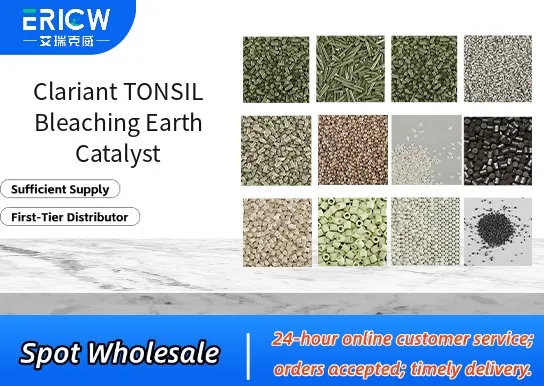
Highly selective adsorption capacity for polar impurities including chlorophyll, carotenoids, and oxidation products.
Optimized particle size distribution ensuring excellent filtration performance and reduced cake resistance.
Low metal content and controlled acidity for minimal product degradation during refining.
Consistent batch-to-batch quality supported by stringent Clariant manufacturing standards.
Environmentally compatible formulation with low dust generation and improved handling safety.
Refining of edible oils (e.g., soybean, sunflower, rapeseed, palm olein).
Decolorization and purification of biodiesel (FAME) prior to final specification compliance.
Treatment of industrial lubricants and transformer oils to remove trace polar contaminants.
Purification of fatty acid methyl esters and glycerin streams in bio-refinery operations.
Polishing step in vegetable oil deodorizer feed pretreatment systems.
| Chemical Type | Natural activated clay (montmorillonite-based) |
| Product Form | Free-flowing granular or powdered solid |
| Appearance | Light grey to beige granules or fine powder |
| Primary Applications | Adsorptive refining of oils and biofuels |
| Key Features | Controlled surface acidity, high surface area, low abrasiveness |
| Benefits | Improved color removal efficiency, extended filter life, reduced oil loss |
| Storage Conditions | Store in dry, well-ventilated area; protect from moisture and contamination |
| Regulatory Compliance | Compliant with EU Regulation (EC) No 10/2011 and FDA 21 CFR §173.900 for food-contact use |
Q1: What is the primary function of TONSIL Bleaching Earth Catalyst in refining processes?
A: TONSIL Bleaching Earth Catalyst is a highly active, acid-activated bentonite-based adsorbent designed to remove impurities such as polar compounds, oxidation products, trace metals, and color bodies from edible oils, biodiesel, and other organic liquids during refining or purification steps.
Q2: How does TONSIL differ from standard bleaching earths?
A: TONSIL grades are engineered for enhanced adsorption capacity and selectivity, particularly toward chlorophyll, carotenoids, and degradation by-products. They offer improved filtration performance and lower residual ash content compared to conventional bleaching clays, supporting cleaner final products and reduced processing time.
Q3: Is TONSIL suitable for use in food-grade applications?
A: Yes — TONSIL Bleaching Earth Catalyst is manufactured under strict quality control and complies with international food safety requirements for processing aids in edible oil refining. It is widely accepted for use in food-grade systems where regulatory approval for clay-based adsorbents applies.
Q4: What factors influence the optimal dosage of TONSIL in a given process?
A: Dosage depends on feedstock quality, desired purity level, temperature, contact time, and equipment configuration. It is typically used at low concentrations and generally ranges from 0.1% to 2% by weight of the treated material — optimization is recommended via lab-scale trials prior to full-scale implementation.
Q5: Can TONSIL be regenerated or reused after processing?
A: No — TONSIL is intended for single-use as a disposable adsorbent. Once saturated with contaminants, its adsorption capacity is significantly reduced and regeneration is not commercially viable or recommended for maintaining consistent product quality and process reliability.
Contact With Us:
E-mail: wangxingqiang@ericwchem.com
Have a Questions? Call Us:
Add:
Building A1, Jiete Industrial Park, Huangpu District, Guangzhou City, Guangdong Province, China