English
 Español
 tiếng việt
 русский
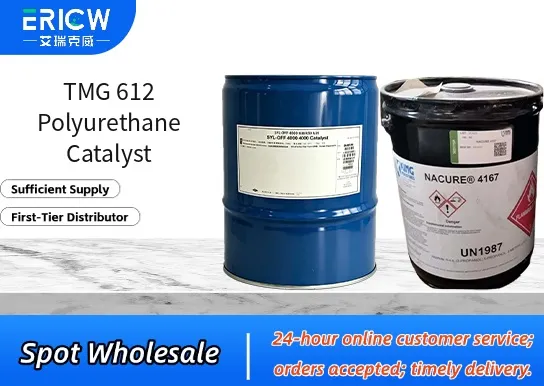
Highly selective tertiary amine catalyst optimized for polyol-isocyanate reactions in flexible and semi-rigid PU foams.
Excellent balance of gelling and blowing activity, enabling precise control over foam rise profile and cell structure.
Low volatility and low odor profile, supporting improved workplace safety and compliance with VOC emission guidelines.
Good compatibility with common polyether and polyester polyols, as well as standard isocyanates (e.g., MDI, TDI).
Stable performance across a wide processing temperature range (15–40 °C), ensuring consistent batch-to-batch reproducibility.
Flexible slabstock foam for bedding and furniture manufacturing.
Semi-rigid automotive seating and interior trim foams.
Integral skin foams used in steering wheels, armrests, and dash components.
Rebonded foam systems requiring uniform cell opening and resilience.
Water-blown or low-GWP physical-blown foam formulations targeting sustainability goals.
| Chemical Type | Tertiary amine (non-metallic, non-ionic) |
| Product Form | Liquid |
| Appearance | Clear, pale yellow to amber liquid |
| Primary Applications | Polyurethane flexible and semi-rigid foam systems |
| Key Features | Low odor, low volatility, balanced reactivity |
| Benefits | Improved worker safety, enhanced foam consistency, reduced post-processing emissions |
| Storage Stability | ≥12 months at 5–30 °C in sealed original container |
| Handling Precautions | Use in well-ventilated areas; refer to SDS for PPE guidance |
Q1: What is the primary function of TMG 612 in polyurethane systems?
A: TMG 612 is a highly selective tertiary amine catalyst designed to promote the urethane reaction (isocyanate–polyol coupling) while providing balanced control over gelation and blowing kinetics. It is especially valued for enabling fine-tuned reactivity profiles in flexible and semi-rigid foam formulations.
Q2: Is TMG 612 compatible with moisture-cure or one-component PU systems?
A: Yes — TMG 612 exhibits good compatibility with one-component moisture-curing polyurethane systems, where it helps accelerate film formation and improve through-cure without significantly compromising pot life under ambient conditions.
Q3: How does TMG 612 compare to traditional amine catalysts like DABCO 33LV in terms of odor and volatility?
A: TMG 612 features lower volatility and reduced amine odor compared to many conventional liquid tertiary amines, contributing to improved workplace handling and lower VOC emissions during processing — making it suitable for applications with stricter environmental or occupational exposure considerations.
Q4: Can TMG 612 be used in combination with other catalysts?
A: Yes — TMG 612 is commonly blended with complementary catalysts (e.g., metal carboxylates or delayed-action amines) to achieve tailored cure profiles, particularly in complex molded or integral-skin foam applications requiring precise control over demold time and surface set.
Q5: What are the recommended storage conditions for TMG 612?
A: Store in tightly sealed original containers at temperatures between 5 °C and 30 °C, away from direct sunlight and strong oxidizing agents. Prolonged exposure to high humidity or elevated temperatures may affect catalytic consistency over time.
Contact With Us:
E-mail: wangxingqiang@ericwchem.com
Have a Questions? Call Us:
Add:
Building A1, Jiete Industrial Park, Huangpu District, Guangzhou City, Guangdong Province, China