English
 Español
 tiếng việt
 русский
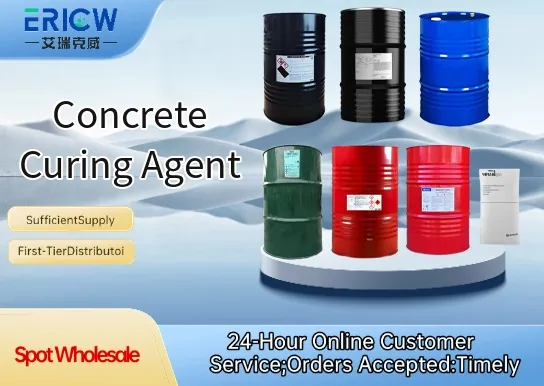
Forms an impermeable, durable membrane to retain moisture during critical early-stage hydration.
Non-toxic and low-VOC formulation compliant with international environmental and occupational safety standards.
Fast-drying surface film (typically 1–2 hours), enabling rapid re-entry and follow-up construction activities.
Compatible with both interior and exterior concrete substrates, including stamped, polished, and colored concrete.
Resists UV degradation and maintains curing efficiency under variable temperature and humidity conditions.
Commercial and residential slab-on-grade concrete floors.
Bridge decks and highway pavements requiring high early-strength development.
Precast concrete elements in manufacturing facilities.
Industrial warehouse floors subjected to heavy forklift traffic and chemical exposure.
Municipal infrastructure projects including sidewalks, curbs, and parking lots.
| Chemical Type | Acrylic-based polymer emulsion |
| Product Form | Ready-to-use liquid |
| Appearance | Translucent milky white liquid |
| Primary Applications | Hydration retention for portland cement concrete |
| Key Features | Membrane-forming, non-reactive, water-based |
| Benefits | Reduces plastic shrinkage cracking and enhances compressive strength gain |
| Application Rate | 0.15–0.20 L/m² per coat (depending on substrate porosity) |
| Storage Stability | 12 months unopened at 5–35°C |
Q1: What is the primary function of a concrete curing agent?
A: A concrete curing agent forms a temporary protective membrane on freshly placed concrete surfaces to significantly reduce moisture loss during the critical early hydration period, thereby promoting optimal strength development and minimizing surface cracking or dusting.
Q2: How soon after concrete placement should the curing agent be applied?
A: Application is typically performed once surface bleed water has evaporated and the concrete can support light foot traffic without imprinting — usually within 1 to 3 hours after finishing, depending on ambient temperature, humidity, and wind conditions.
Q3: Is this curing agent compatible with subsequent surface treatments like sealers or coatings?
A: Yes, most standard film-forming curing agents are designed to allow for later application of acrylic sealers, epoxies, or decorative overlays — provided the membrane is fully cured and any residual residue is removed per manufacturer guidelines prior to topcoating.
Q4: Can it be used on vertical or overhead concrete surfaces?
A: While primarily formulated for horizontal slabs, certain low-sag or spray-grade variants are suitable for vertical applications; however, uniform coverage and adequate dwell time must be ensured to prevent premature runoff or uneven film formation.
Q5: How does weather affect curing agent performance?
A: High temperatures and low humidity accelerate evaporation and may require earlier application or supplemental misting; conversely, cold or rainy conditions can delay film formation or compromise adhesion — always consult technical data for recommended application temperature and weather windows.
Contact With Us:
E-mail: wangxingqiang@ericwchem.com
Have a Questions? Call Us:
Add:
Building A1, Jiete Industrial Park, Huangpu District, Guangzhou City, Guangdong Province, China