English
 Español
 tiếng việt
 русский
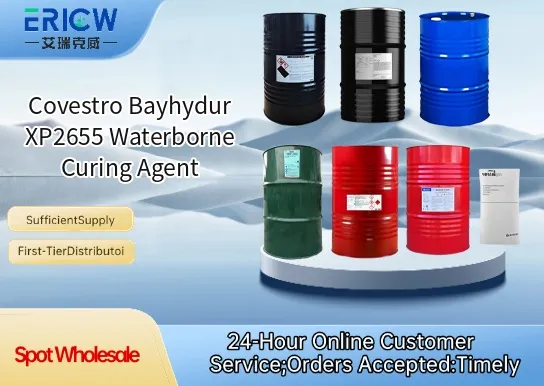
High-performance aliphatic polyisocyanate crosslinker specifically designed for waterborne acrylic and polyurethane dispersions.
Excellent hydrolytic stability and storage stability in aqueous systems, enabling extended shelf life without viscosity increase or gelation.
Enables fast ambient-cure and low-bake film formation with outstanding hardness development and chemical resistance.
Low VOC content (< 5 g/L) and APEO-free formulation compliant with stringent environmental and regulatory requirements.
Good compatibility with a broad range of waterborne resins, facilitating formulation flexibility and robust processing.
Automotive refinish coatings requiring high gloss, mar resistance, and rapid turnaround.
Industrial wood coatings for furniture, flooring, and cabinetry demanding durability and low-temperature cure.
Architectural and decorative waterborne topcoats for interior and exterior applications.
Plastic coatings for automotive trim and consumer electronics with excellent adhesion and flexibility.
Coil coatings where corrosion protection and high-speed line performance are critical.
| Chemical Type | Aliphatic polyisocyanate (HDI-based) |
| Product Form | Waterborne dispersion |
| Appearance | Clear to slightly hazy, colorless to pale yellow liquid |
| Solids Content | 40–42 wt% |
| pH (10% aqueous dilution) | 7.0–8.5 |
| Viscosity (23°C, Brookfield RVT, spindle #3, 20 rpm) | 100–300 mPa·s |
| NCO Content | 4.5–5.0 wt% |
| Primary Applications | Crosslinker for waterborne acrylic, polyester, and PU dispersions |
Q1: What is the primary function of Bayhydur XP2655 in waterborne coating systems?
A: Bayhydur XP2655 is a water-dispersible polyisocyanate curing agent designed to react with waterborne hydroxyl-functional resins—such as acrylics, polyesters, or hybrids—to form durable, crosslinked polyurethane networks. It enables high-performance film properties including excellent chemical resistance, mechanical strength, and gloss retention.
Q2: Is Bayhydur XP2655 compatible with common waterborne base resins?
A: Yes—it is specifically formulated for compatibility with a broad range of commercially available waterborne hydroxyl-functional dispersions. Compatibility should always be verified experimentally in the final formulation due to variations in resin pH, particle size, surfactants, and co-solvent content.
Q3: How does Bayhydur XP2655 contribute to VOC reduction?
A: As a waterborne curing agent, XP2655 contains no organic solvents and allows formulators to significantly reduce or eliminate solvent use in the curing component. When paired with low-VOC or solvent-free waterborne resins, it supports compliance with increasingly stringent regional VOC regulations without compromising cure speed or film performance.
Q4: What are typical storage and handling recommendations?
A: Store in tightly sealed original containers at temperatures between 5 °C and 30 °C, protected from moisture, direct sunlight, and freezing. Avoid prolonged exposure to high humidity during handling, and ensure equipment is clean and dry before use to prevent premature viscosity increase or gelation.
Q5: Can Bayhydur XP2655 be used in ambient-cure applications?
A: Yes—it is engineered to provide practical ambient-temperature cure profiles, especially when combined with catalytic additives such as tertiary amines or metal chelates. Full property development may benefit from mild thermal post-cure, but functional performance is often achieved within hours under standard workshop conditions.
Contact With Us:
E-mail: wangxingqiang@ericwchem.com
Have a Questions? Call Us:
Add:
Building A1, Jiete Industrial Park, Huangpu District, Guangzhou City, Guangdong Province, China