English
 Español
 tiếng việt
 русский
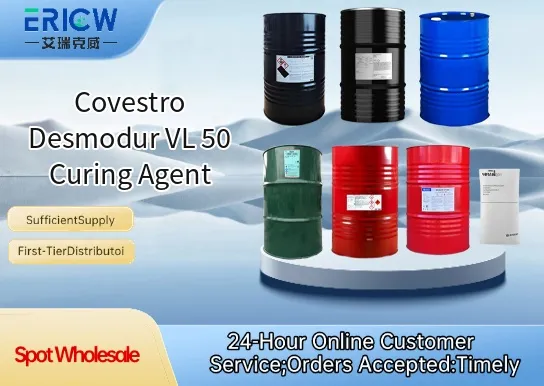
Aliphatic polyisocyanate-based curing agent offering excellent UV stability and color retention.
Low-viscosity liquid formulation enabling easy handling, precise metering, and efficient mixing with hydroxyl-functional resins.
Provides fast ambient-cure kinetics without requiring elevated temperatures or catalysts.
Delivers superior chemical resistance, hardness, and abrasion resistance in final coatings.
Compliant with REACH and meets stringent VOC regulations for industrial coating applications.
Automotive clearcoats and OEM topcoats requiring high gloss and long-term weatherability.
Industrial maintenance coatings for metal and plastic substrates exposed to outdoor conditions.
High-performance wood finishes demanding clarity, hardness, and non-yellowing performance.
Railway and bus exterior coatings where UV resistance and mechanical durability are critical.
Plastic coatings for automotive interior parts and consumer electronics housings.
| Chemical Type | Aliphatic polyisocyanate (hexamethylene diisocyanate–based) |
| Product Form | Clear, low-viscosity liquid |
| Appearance | Colorless to pale yellow, transparent liquid |
| NCO Content (wt %) | 17.5 – 18.5% |
| Viscosity at 25 °C | 300 – 500 mPa·s |
| Density at 20 °C | 1.14 – 1.16 g/cm³ |
| Flash Point (PMCC) | 125 – 135 °C |
| Primary Applications | Two-component polyurethane coatings for automotive, industrial, and wood finishing |
Q1: What is the primary chemical nature of Desmodur VL 50?
A: Desmodur VL 50 is an aliphatic polyisocyanate based on hexamethylene diisocyanate (HDI), formulated as a biuret-type trimer. It is solvent-free and designed for low-viscosity, high-reactivity two-component polyurethane systems.
Q2: Is Desmodur VL 50 suitable for coatings requiring excellent UV stability and gloss retention?
A: Yes — as an aliphatic isocyanate, Desmodur VL 50 delivers outstanding resistance to yellowing and weathering, making it well-suited for high-performance topcoats in automotive refinish, industrial maintenance, and premium architectural applications where long-term clarity and color stability are critical.
Q3: How does Desmodur VL 50 compare to other HDI trimers in terms of viscosity and handling?
A: Desmodur VL 50 offers notably lower viscosity compared to many conventional HDI trimer-based curing agents, enabling easier mixing, improved pot life control, and enhanced compatibility with a broad range of hydroxyl-functional resins — especially at ambient or moderately elevated processing temperatures.
Q4: What are typical formulation considerations when using Desmodur VL 50?
A: It is typically used at low concentrations relative to the resin component, with dosage depending on formulation requirements such as desired crosslink density, cure speed, and final film properties. Catalyst selection (e.g., dibutyltin dilaurate or tertiary amines) and moisture control are key factors influencing pot life and through-cure performance.
Contact With Us:
E-mail: wangxingqiang@ericwchem.com
Have a Questions? Call Us:
Add:
Building A1, Jiete Industrial Park, Huangpu District, Guangzhou City, Guangdong Province, China