English
 Español
 tiếng việt
 русский
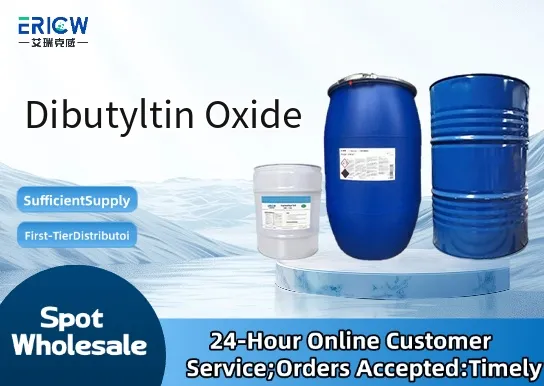
High catalytic efficiency in esterification and transesterification reactions.
Thermally stable up to 200 °C, supporting high-temperature polymer processing.
Low volatility compared to monobutyltin derivatives, enhancing process safety and handling.
Excellent solubility in common organic solvents (e.g., toluene, xylene, MEK) and polyol blends.
Controlled reactivity profile—minimizes side reactions such as gelation or discoloration in sensitive formulations.
Catalyst for silicone rubber vulcanization (condensation-cure RTV systems).
Key catalyst in the production of polyurethane elastomers and coatings.
Promoter in polyester resin synthesis and alkyd modification.
Stabilizer and catalyst in PVC heat stabilization formulations (co-stabilizer with Ca/Zn systems).
Reaction accelerator in moisture-cure sealants and adhesives based on alkoxysilanes.
| Chemical Type | Organotin compound — dialkyltin oxide |
| Chemical Formula | C8H18SnO |
| Product Form | White to off-white crystalline powder |
| Appearance | Free-flowing, non-hygroscopic granules or fine powder |
| Melting Point | 125–135 °C (decomposes above 140 °C) |
| Assay (Sn content) | 55.0–57.0% (by ICP-OES) |
| Primary Applications | Catalysis (polycondensation, urethane, silicone), PVC stabilization aid |
| Regulatory Compliance | REACH registered; compliant with EU Directive 2009/48/EC (Toy Safety) for restricted tin compounds (≤0.1% w/w in accessible parts) |
| Common Compatible Systems | Suitability |
| Hydroxyl-terminated polyesters & polyethers | Highly Recommended – Rapid, reproducible catalysis without premature gelation |
| Alkoxy-functional silicones (e.g., methyltrimethoxysilane) | Highly Recommended – Efficient condensation cure at ambient/mild elevated temperatures |
| Calcium–zinc stabilized PVC blends | Recommended – Synergistic thermal stabilization; avoid excessive loading (>0.3 phr) |
| Aqueous emulsion systems | Suitable – Only with pre-dispersed or surface-treated grades; limited compatibility without surfactant support |
Q1: What is the CAS Number for Dibutyltin Oxide?
A: The CAS Registry Number is 818-08-6.
Q2: What is the typical recommended dosage in silicone RTV formulations?
A: Standard loading ranges from 0.1 to 0.5 parts per hundred resin (phr), depending on cure speed requirements and filler content; higher loadings may increase yellowing risk.
Q3: How does Dibutyltin Oxide compare to Dibutyltin Dilaurate (DBTDL) in catalytic performance?
A: DBTO offers slower, more controllable reactivity and superior thermal stability; DBTDL provides faster initial cure but lower decomposition onset—making DBTO preferred for high-temperature processing and reduced VOC emissions.
Q4: Is Dibutyltin Oxide subject to food contact or migration restrictions?
A: Yes—EU Regulation (EC) No 10/2011 restricts organotin compounds in plastic food contact materials; DBTO is not authorized for direct food-contact applications. Migration testing required for indirect contact scenarios.
Q5: Can Dibutyltin Oxide be used in waterborne systems?
A: Only with specialized dispersion grades or when pre-emulsified using compatible nonionic surfactants; direct addition to water typically results in poor dispersion and reduced catalytic activity.
Contact With Us:
E-mail: wangxingqiang@ericwchem.com
Have a Questions? Call Us:
Add:
Building A1, Jiete Industrial Park, Huangpu District, Guangzhou City, Guangdong Province, China