English
 Español
 tiếng việt
 русский
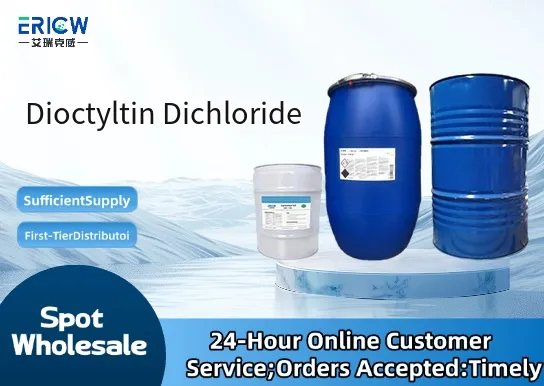
High catalytic efficiency in polyurethane and silicone curing systems.
Excellent thermal stability up to 200 °C under inert conditions.
Low volatility and reduced vapor pressure compared to monobutyltin derivatives.
Precise stoichiometric control due to well-defined molecular structure (C16H34SnCl2).
Consistent batch-to-batch reproducibility meeting ISO 9001 manufacturing standards.
Catalyst for addition-cure liquid silicone rubber (LSR) formulations.
Stabilizer and crosslinking promoter in polyvinyl chloride (PVC) processing.
Intermediate in the synthesis of organotin-based biocides and antifouling agents.
Accelerator in moisture-cure polyurethane sealants and adhesives.
Co-catalyst in tin-mediated transesterification reactions for polyester synthesis.
| Chemical Type | Organotin compound (dialkyltin dichloride) |
| Product Form | White to off-white crystalline powder |
| Appearance | Free-flowing, non-hygroscopic solid |
| Melting Point | 105–110 °C (literature value; decomposition onset >180 °C) |
| Primary Applications | Catalysis, PVC stabilization, silicone crosslinking |
| Key Features | High tin content (~37.5 wt%), low chloride residue |
| Benefits | Reduced side reactions, improved shelf life of formulated systems |
| Regulatory Compliance | REACH registered; not listed in EU Biocidal Products Regulation Annex I |
| Common Compatible Systems | Suitability |
| Platinum-free LSR formulations | Highly Recommended – Enables rapid, uniform cure without inhibition |
| PVC plastisols and organosol systems | Recommended – Effective heat stabilizer with minimal discoloration |
| Alkoxy-terminated polydimethylsiloxane (PDMS) gels | Suitable – Compatible with Si–H crosslinkers; requires controlled moisture exclusion |
| Two-component polyurethane elastomers | Recommended – Enhances gel time control and final hardness development |
Q1: What is the CAS Number for Dioctyltin Dichloride?
A: The CAS Registry Number is 301-10-0.
Q2: What is the typical usage level in silicone rubber formulations?
A: Recommended dosage ranges from 5 to 50 ppm (parts per million) relative to total formulation mass, depending on cure speed requirements and inhibitor presence.
Q3: How does Dioctyltin Dichloride compare to Dibutyltin Dilaurate (DBTDL) in catalytic performance?
A: Dioctyltin dichloride offers higher thermal stability and lower volatility than DBTDL, but exhibits slower initial reactivity in ambient-cure systems; it is preferred for high-temperature processing where catalyst retention is critical.
Q4: Is Dioctyltin Dichloride compliant with food-contact regulations?
A: No — it is not authorized for direct food-contact applications under FDA 21 CFR or EU Framework Regulation (EC) No 1935/2004 due to organotin toxicity concerns and lack of migration testing data.
Q5: Can leaching or tin migration occur from cured products containing this compound?
A: Yes — residual unreacted dioctyltin dichloride may migrate under humid or acidic conditions; full thermal post-cure and rigorous extraction testing (e.g., EN 13130) are strongly advised for end-use validation.
Contact With Us:
E-mail: wangxingqiang@ericwchem.com
Have a Questions? Call Us:
Add:
Building A1, Jiete Industrial Park, Huangpu District, Guangzhou City, Guangdong Province, China