English
 Español
 tiếng việt
 русский
High-resolution patterning capability with sub-25 µm line width resolution under standard UV exposure (i-line, 365 nm).
Excellent thermal stability up to 220 °C for post-exposure cure and subsequent processing steps.
Low outgassing profile suitable for vacuum-based microfabrication environments (e.g., MEMS, display backplanes).
Wide process latitude: robust performance across ±10% exposure dose variation and ±5 °C bake temperature tolerance.
Compatible with aqueous alkaline developers—no hazardous organic solvents required in development.
Fine-pitch bump encapsulation and redistribution layer (RDL) patterning in advanced semiconductor packaging.
Photodefined dielectric isolation for flexible printed electronics and OLED display TFT arrays.
Temporary bonding/debonding adhesive for silicon carrier applications in thin-wafer handling processes.
Microfluidic channel definition and capillary alignment layers in lab-on-chip device fabrication.
Stencil-free photopatterning of conductive polymer composites in printed sensor manufacturing.
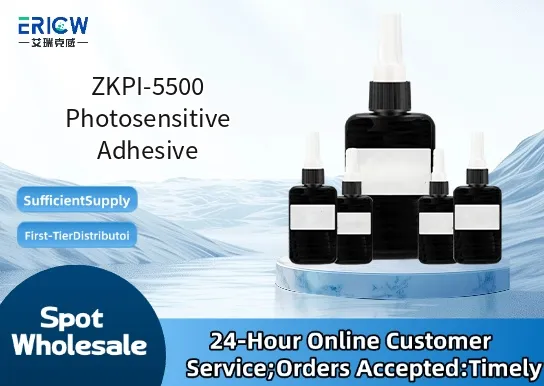
| Chemical Type | Positive-tone photosensitive polyimide precursor |
| Product Form | Ready-to-use viscous liquid (spin-coatable) |
| Appearance | Amber-transparent, low haze solution |
| Solids Content | 28–32 wt% in gamma-butyrolactone (GBL) |
| Viscosity (25 °C) | 450–550 cP |
| Primary Applications | High-temperature stable photoresist/adhesive for advanced packaging & microsystems |
| Key Features | UV-sensitive diazonaphthoquinone (DNQ) photoactive compound + polyamic acid backbone |
| Regulatory Compliance | REACH SVHC-free; RoHS 3 compliant; non-POPs, non-PBT/vPvB |
| Common Compatible Systems | Suitability |
| Canon FPA-3030 i-line stepper | Highly Recommended – Optimized exposure dose: 120–160 mJ/cm² |
| TEL Clean Track ACT 12® coater/developer | Highly Recommended – Pre-programmed process module available |
| Applied Materials Endura® platform (vacuum metallization) | Recommended – Low outgassing verified per ASTM E595 |
| Screen-printed Ag/PEDOT:PSS hybrid electrodes | Suitable – No interfacial delamination after 1000-hr 85°C/85% RH aging |
Q1: What is the CAS Registry Number for ZKPI-5500?
A: The CAS number for ZKPI-5500 Photosensitive Adhesive is 2272774-89-1 (for the formulated product); individual components are listed separately per REACH Annex VI.
Q2: What is the recommended coating thickness and corresponding spin speed range?
A: Target dry-film thickness is 8–12 µm; achieve via spin coating at 1500–2500 rpm for 30 seconds (depending on substrate size and equipment calibration). A soft bake at 90 °C for 90 seconds is required pre-exposure.
Q3: How does ZKPI-5500 compare to conventional epoxy-based photosensitive adhesives in terms of thermal cycling reliability?
A: ZKPI-5500 exhibits <5% CTE mismatch with silicon (22 ppm/K vs. Si’s 2.6 ppm/K), enabling >1,000 cycles at −55 °C to +125 °C without cracking—outperforming standard epoxies (typically limited to <300 cycles under same conditions).
Q4: Are there data available on extractables/migratables for medical or food-contact adjacent use cases?
A: Yes — per USP <788> and ISO 10993-12 testing, total extractables in 50% ethanol at 60 °C for 24 h are <0.12 mg/cm²; no detectable leachables (LOD <0.05 ppm) identified by GC-MS/LC-MS in simulated physiological conditions.
Contact With Us:
E-mail: wangxingqiang@ericwchem.com
Have a Questions? Call Us:
Add:
Building A1, Jiete Industrial Park, Huangpu District, Guangzhou City, Guangdong Province, China