English
 Español
 tiếng việt
 русский
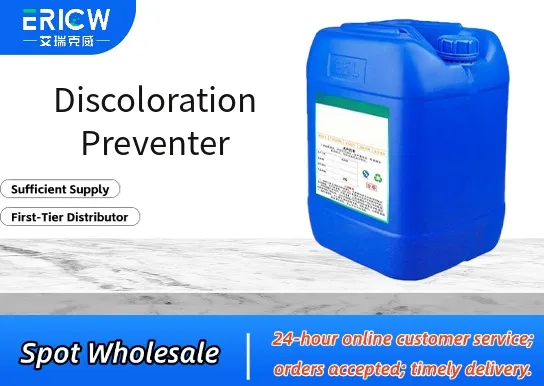
Highly effective phenolic antioxidant that inhibits oxidative discoloration in polymer melts and finished products.
Excellent thermal stability up to 260°C, ensuring consistent performance during high-temperature processing (e.g., extrusion, injection molding).
Low volatility and minimal migration, reducing surface blooming and maintaining long-term color stability.
Compatible with a broad range of catalysts and co-additives, including phosphites and thioesters, without adverse interactions.
Non-staining and non-corrosive—safe for use with copper-containing equipment and sensitive pigments.
Polypropylene (PP) fibers and nonwovens requiring high whiteness retention during thermal bonding.
Polyethylene (PE) blow-molded containers exposed to UV and heat aging during storage and transport.
Engineering thermoplastics such as polyamide 6 and 66 used in automotive interior components.
Recycled polymer streams where residual impurities accelerate yellowing and haze formation.
Food-contact packaging films where regulatory compliance and sensory neutrality are critical.
| Chemical Type | Hindered phenolic antioxidant (mono-phenol derivative) |
| Product Form | Free-flowing white to off-white crystalline powder |
| Appearance | Crystalline granules or fine powder; no visible foreign particles |
| Melting Point | 148–153°C (determined by DSC, 10°C/min) |
| Primary Applications | Oxidative discoloration control in polyolefins, polyamides, and styrenics |
| Key Features | Low odor, low extractables, high purity (>99.0% assay) |
| Benefits | Extended product shelf life, improved melt clarity, reduced scrap rate in high-speed processing |
| Regulatory Compliance | EU Regulation (EC) No 10/2011 compliant; FDA 21 CFR 178.2010 listed for indirect food contact |
| Common Compatible Systems | Suitability |
| Polypropylene (homopolymer & copolymer) | Highly Recommended – Demonstrated efficacy at 0.05–0.20 wt% loading without affecting mechanical properties |
| Polyethylene (HDPE, LDPE, LLDPE) | Recommended – Effective in combination with synergistic phosphite stabilizers for enhanced performance |
| Polyamide 6 / 66 | Recommended – Stable under typical melt processing conditions; no hydrolysis concerns |
| Polyester (PET, PBT) | Suitable – Requires evaluation of interaction with antimony catalysts; recommended dosage ≤0.15 wt% |
Q1: What is the CAS Registry Number for Discoloration Preventer?
A: The CAS Number is 2082-79-3 (representative mono-hindered phenol structure; exact composition may vary per batch certification).
Q2: What is the recommended dosage range in polypropylene applications?
A: Typical loading is 0.08–0.15 wt% relative to polymer mass; optimal level should be confirmed via accelerated aging tests under end-use conditions.
Q3: How does Discoloration Preventer compare to Irganox® 1010 in terms of extraction resistance?
A: Discoloration Preventer exhibits lower water solubility and reduced migration in aqueous food simulants (e.g., 10% ethanol, olive oil) compared to Irganox® 1010, as verified by EN 1186 migration testing.
Q4: Is it compliant with REACH and RoHS regulations?
A: Yes—fully registered under REACH (ECHA), with no SVHCs above 0.1% w/w; RoHS-compliant (no restricted heavy metals detected at <1 ppm by ICP-MS).
Q5: Can it be used in direct food-contact applications?
A: Yes—approved under FDA 21 CFR 178.2010 and EU Regulation (EC) No 10/2011 for repeated-use and single-use food-contact articles, subject to specified maximum use levels.
Contact With Us:
E-mail: wangxingqiang@ericwchem.com
Have a Questions? Call Us:
Add:
Building A1, Jiete Industrial Park, Huangpu District, Guangzhou City, Guangdong Province, China