English
 Español
 tiếng việt
 русский
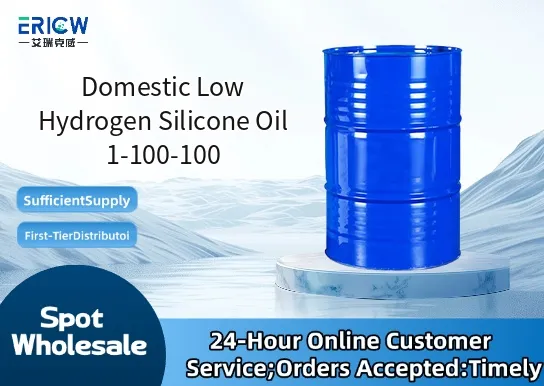
Low hydrogen content ensures exceptional thermal and oxidative stability under prolonged high-temperature processing.
Highly uniform molecular weight distribution delivers consistent viscosity performance and predictable flow behavior.
Excellent hydrophobicity and surface slip, enhancing release efficiency and reducing friction in polymer processing.
Low volatility and minimal extractables support compliance with stringent migration requirements for indirect food-contact applications.
Readily dispersible in common organic solvents and compatible with silicone-based emulsifiers for stable formulation integration.
Release agent for thermoset composites (e.g., epoxy, phenolic) in aerospace and automotive mold manufacturing.
Internal lubricant and anti-blocking additive in high-performance silicone rubber compounding.
Surface modifier for silicone elastomer coatings to improve gloss, scratch resistance, and demolding fidelity.
Processing aid in high-viscosity polyurethane and polysulfide sealant systems.
Base fluid in specialty antifoam formulations for industrial water treatment and pulp & paper processes.
| Chemical Type | Methyl-hydrogen siloxane copolymer (low H-content) |
| Product Form | Clear, colorless to pale yellow liquid |
| Appearance | Homogeneous, free from visible particulates or haze |
| Viscosity (25°C, cSt) | 95–105 |
| Density (25°C, g/cm³) | 0.97–0.99 |
| Refractive Index (25°C) | 1.400–1.408 |
| Key Features | Low hydrogen content (~0.08–0.12 wt%), high Si–H bond stability |
| Regulatory Compliance | Conforms to GB/T 23265–2009 (Chinese national standard for silicone oils); non-REACH registered substance (pre-registered) |
| Common Compatible Systems | Suitability |
| Platinum-catalyzed LSR (Liquid Silicone Rubber) | Highly Recommended – Minimal catalyst poisoning; enhances flow and surface finish |
| Heat-cured HTV Silicone Rubber | Recommended – Effective as internal lubricant without compromising tensile strength |
| Silicone Emulsion Systems (anionic/nonionic) | Suitable – Requires pre-dilution and pH control (6.5–8.0) for stable dispersion |
| Polyester & Polyether-based Polyurethanes | Recommended – Improves cell openness and demold release in rigid foam systems |
Q1: What is the CAS Registry Number for Domestic Low Hydrogen Silicone Oil 1-100-100?
A: The CAS number is 63148-62-9, assigned to the methyl-hydrogen siloxane oligomer fraction meeting this specification.
Q2: What is the recommended dosage range when used as a release agent in composite molding?
A: Typical dosage is 0.5–2.0 wt% relative to resin solids; optimal loading depends on mold geometry, cure temperature, and substrate porosity—start at 1.0 wt% and adjust per validation testing.
Q3: How does it differ from standard dimethyl silicone oil (e.g., PDMS 100 cSt) in high-temperature applications?
A: Unlike standard PDMS, its controlled Si–H functionality enables covalent bonding with fillers and substrates under heat, delivering superior film integrity, reduced volatilization above 200°C, and lower extractable residue.
Q4: Is it compliant with EU food contact regulation (EU No 10/2011) for indirect contact?
A: It is not yet authorized under EU 10/2011 Annex I; however, it meets Chinese GB 9685–2016 limits for silicone migration (≤0.3 mg/kg food simulant) and is suitable for equipment lubricants in food-processing environments per FDA 21 CFR §175.300.
Q5: Does it exhibit measurable migration in elastomeric seals exposed to aqueous media?
A: Migration is negligible (<0.02% wt loss after 7 days in distilled water at 60°C per ISO 10993-12 extraction); crosslinking density and post-cure conditions significantly influence long-term retention.
Contact With Us:
E-mail: wangxingqiang@ericwchem.com
Have a Questions? Call Us:
Add:
Building A1, Jiete Industrial Park, Huangpu District, Guangzhou City, Guangdong Province, China