English
 Español
 tiếng việt
 русский
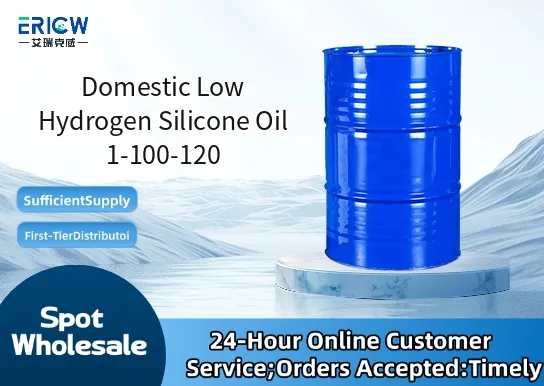
Low hydrogen content ensures exceptional thermal and oxidative stability under elevated processing temperatures.
Highly uniform molecular weight distribution delivers consistent viscosity performance across batch variations.
Excellent hydrophobicity and surface slip, enhancing release efficiency in mold and coating applications.
Low volatility and minimal volatile organic compound (VOC) emission, supporting safer industrial handling.
Compatible with common catalysts and crosslinkers used in silicone-based formulation systems.
Release agent for rubber and thermoplastic elastomer (TPE) molding processes.
Surface modifier in silicone emulsion coatings for paper and textile finishing.
Carrier fluid and rheology modifier in high-performance lubricant greases.
Processing aid in silicone rubber compounding to improve filler dispersion and extrusion smoothness.
Base fluid for specialty dielectric fluids in low-power electronic encapsulation systems.
| Chemical Type | Linear polydimethylsiloxane (PDMS) with controlled low-hydrogen end-blocking |
| Product Form | Clear, colorless to pale yellow liquid |
| Appearance | Transparent, homogeneous, free from sediment or cloudiness |
| Viscosity (25°C, cSt) | 100–120 (measured per ASTM D2161) |
| Density (25°C, g/cm³) | 0.96–0.97 |
| Refractive Index (25°C) | 1.400–1.403 |
| Flash Point (Cleveland Open Cup, °C) | ≥300 |
| Regulatory Compliance | REACH registered; non-REACH SVHC listed; compliant with RoHS Directive 2011/65/EU |
| Common Compatible Systems | Suitability |
| Platinum-catalyzed addition-cure silicone systems | Highly Recommended – Minimal inhibition; enhances flow and demolding without affecting cure kinetics |
| Condensation-cure RTV silicone sealants | Recommended – Requires compatibility testing for acetoxy/alkoxy variants; stable in neutral formulations |
| Non-ionic silicone emulsions (e.g., PEG-modified) | Suitable – Forms stable microemulsions at ≤5% w/w loading; no phase separation observed |
| Mineral oil–based hydraulic fluids | Suitable – Limited miscibility; recommended only for temporary blending in low-shear applications |
Q1: What is the CAS Registry Number for Domestic Low Hydrogen Silicone Oil 1-100-120?
A: The CAS number is 63148-62-9 (generic for linear PDMS oils with low-hydrogen endgroups; exact structure may vary slightly by manufacturer batch).
Q2: What is the recommended dosage range when used as a release agent in rubber molding?
A: Typical dosage is 0.5–2.0% by weight of compound; optimal level depends on mold geometry, temperature, and substrate porosity—start at 1.0% and adjust based on release consistency and surface residue.
Q3: How does it differ from standard methyl-terminated PDMS oils (e.g., Dow Corning 200 Fluid 100 cSt)?
A: Unlike conventional methyl-terminated PDMS, this grade features selectively reduced Si–H bond concentration at chain ends, resulting in lower catalytic sensitivity, improved long-term thermal stability (>250°C), and reduced risk of unintended hydrosilylation side reactions.
Q4: Is extraction or migration into food-contact polymers a concern under EU Regulation (EC) No 1935/2004?
A: When fully cured or immobilized in final formulations, migration remains below EU-specific migration limits (SML) of 0.01 mg/kg for silicones; however, direct food contact use requires prior validation per Commission Regulation (EU) No 10/2011 Annex I compliance testing.
Contact With Us:
E-mail: wangxingqiang@ericwchem.com
Have a Questions? Call Us:
Add:
Building A1, Jiete Industrial Park, Huangpu District, Guangzhou City, Guangdong Province, China