English
 Español
 tiếng việt
 русский
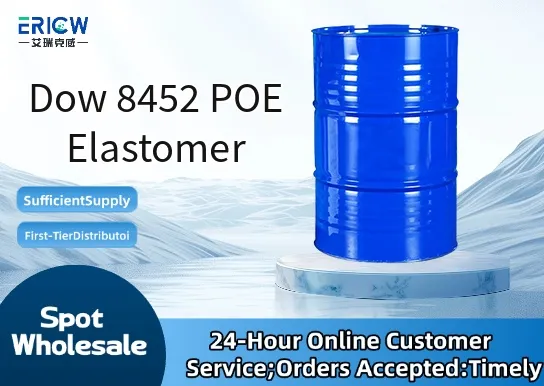
Excellent low-temperature flexibility with a glass transition temperature (Tg) of approximately −55 °C
Outstanding resistance to heat aging, ozone, and UV exposure without requiring additional stabilizers
High melt flow index (MFI) enabling efficient processing via injection molding and extrusion
Good compatibility with polypropylene (PP) and other polyolefins for thermoplastic vulcanizate (TPV) formulations
Low extractables and excellent color stability—ideal for demanding consumer and automotive applications
Automotive interior trim components including soft-touch dashboards and door panels
Flexible overmolded grips for power tools and consumer electronics
Seals and gaskets in HVAC and appliance systems
Soft-skin thermoplastic elastomer (TPE) profiles for medical device housings
Impact-modified polypropylene compounds for structural automotive parts
| Chemical Type | Polyolefin Elastomer (POE), ethylene-octene copolymer |
| Product Form | Pellets |
| Appearance | Off-white to light tan, free-flowing cylindrical pellets |
| Melt Flow Index (190 °C/2.16 kg) | 25–35 g/10 min |
| Density (ASTM D792) | 0.868–0.872 g/cm³ |
| Hardness (Shore A, ASTM D2240) | 65–70 |
| Primary Applications | TPE overmolding, PP impact modification, soft-touch automotive interiors |
| Key Features | Low Tg, high elasticity, processability, weather resistance |
Q1: What is the primary function of Dow 8452 POE Elastomer in polymer blends?
A: Dow 8452 is a polyolefin elastomer designed to enhance impact resistance, flexibility, and melt processability—particularly when blended with rigid polyolefins such as PP or HDPE. It acts as a compatibilizing and toughening agent without significantly compromising stiffness or thermal stability.
Q2: Is Dow 8452 suitable for food-contact applications?
A: Dow 8452 is manufactured from FDA-compliant raw materials and is commonly used in food packaging films and containers where regulatory compliance is required. Final regulatory approval depends on the full formulation, processing conditions, and intended end-use—users should consult local regulatory authorities and perform appropriate testing.
Q3: How does Dow 8452 compare to traditional EPDM or EPR impact modifiers?
A: Unlike diene-based elastomers, Dow 8452 offers superior shear stability, narrower molecular weight distribution, and better dispersion in polyolefin matrices. It typically provides more consistent mechanical performance across processing conditions and avoids potential crosslinking or scorch issues associated with peroxide-curable systems.
Q4: What are recommended processing methods for Dow 8452 POE Elastomer?
A: Dow 8452 is compatible with standard thermoplastic processing techniques including extrusion, injection molding, and blow molding. It exhibits excellent melt flow and low viscosity, enabling efficient blending at typical polyolefin processing temperatures (180–230 °C), with minimal thermal degradation under controlled residence times.
Contact With Us:
E-mail: wangxingqiang@ericwchem.com
Have a Questions? Call Us:
Add:
Building A1, Jiete Industrial Park, Huangpu District, Guangzhou City, Guangdong Province, China