English
 Español
 tiếng việt
 русский
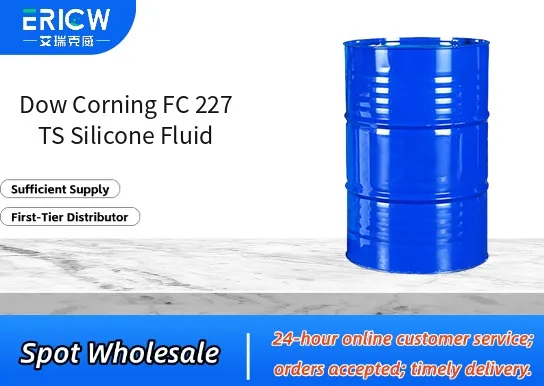
Highly stable, low-viscosity methylphenyl silicone fluid with excellent thermal and oxidative resistance.
Low surface tension and superior spreading characteristics on diverse substrates.
Hydrophobic and oleophobic properties providing effective water and oil repellency.
Compatible with common organic solvents and widely used polymer systems.
Non-volatile and non-yellowing under normal processing and service conditions.
Release agent for rubber, plastic, and composite molding processes.
Surface modifier in coatings and inks to enhance slip, mar resistance, and substrate wetting.
Key ingredient in specialty lubricants and greases for precision instruments and electronics.
Carrier fluid in pesticide formulations and agricultural adjuvants.
Component in personal care emulsions requiring inert, non-irritating silicone functionality.
| Chemical Type | Methylphenyl silicone fluid |
| Product Form | Clear, colorless liquid |
| Appearance | Clear, mobile liquid at room temperature |
| Primary Applications | Release agents, surface modifiers, lubricant base fluids |
| Key Features | Thermally stable, hydrophobic, low surface tension |
| Benefits | Improved release performance, enhanced substrate coverage, reduced surface defects |
| Storage Conditions | Store in original sealed container at 15–25°C; protect from moisture and contamination |
Q1: What is the primary function of Dow Corning FC 227 TS Silicone Fluid in industrial formulations?
A: Dow Corning FC 227 TS Silicone Fluid is a high-purity, low-viscosity silicone fluid designed primarily as a surface modifier and processing aid. It imparts excellent lubricity, substrate wetting, and release properties while maintaining thermal and chemical stability in demanding manufacturing environments.
Q2: Is FC 227 TS compatible with common polymer systems such as polyolefins, polyesters, and thermoplastic elastomers?
A: Yes, FC 227 TS exhibits broad compatibility with a wide range of polymers and resins, including polyolefins, polyesters, polycarbonates, and TPEs. Its non-reactive nature and low surface tension allow for effective dispersion without compromising matrix integrity or long-term performance.
Q3: How is FC 227 TS typically incorporated into formulations?
A: FC 227 TS is generally added during compounding or masterbatch preparation, either neat or pre-diluted in a compatible carrier. Dosage depends on formulation requirements but typically ranges from 0.1% to 2% by weight—adjustments should be made based on desired surface effect, processing conditions, and final part functionality.
Q4: Does FC 227 TS affect the mechanical or optical properties of finished parts?
A: When used within recommended dosage levels, FC 227 TS does not significantly impair tensile strength, impact resistance, or clarity in transparent systems. Its low volatility and high thermal stability help minimize blooming or haze formation during processing and service life.
Contact With Us:
E-mail: wangxingqiang@ericwchem.com
Have a Questions? Call Us:
Add:
Building A1, Jiete Industrial Park, Huangpu District, Guangzhou City, Guangdong Province, China