English
 Español
 tiếng việt
 русский
Exceptional melt processability for high-speed extrusion and injection molding.
Outstanding softness and flexibility with low compression set performance.
Excellent clarity and gloss for premium aesthetic applications.
Superior adhesion to polypropylene (PP) and polyethylene (PE) substrates without primers.
Good UV stability and long-term weathering resistance in outdoor applications.
Soft-touch overmolding for automotive interior trim and controls.
Flexible packaging films requiring toughness and seal integrity.
Consumer electronics casings and grips demanding ergonomic feel and durability.
Premium footwear components including midsoles and outsoles.
Medical tubing and seals requiring biocompatibility support and low extractables.
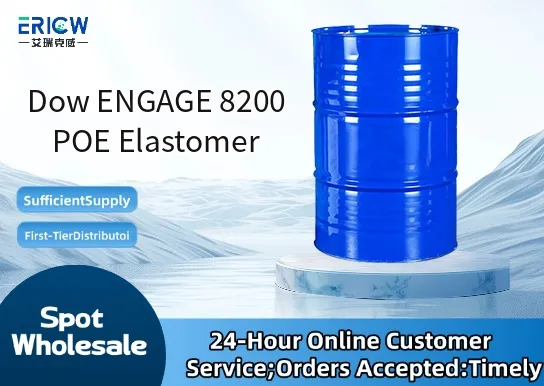
| Chemical Type | Polyolefin Elastomer (POE), ethylene-octene copolymer |
| Product Form | Pellets |
| Appearance | Off-white to light amber, free-flowing pellets |
| Primary Applications | Overmolding, flexible packaging, soft-touch components |
| Key Features | Low hardness, high elasticity, excellent PP/PE compatibility |
| Benefits | Enhanced design freedom, reduced cycle times, improved part aesthetics |
| Processing Method | Injection molding, extrusion, blow molding |
| Regulatory Compliance | Meets FDA 21 CFR §177.1520 for food contact (when processed per guidelines) |
Q1: What is the primary function of ENGAGE 8200 in polymer blends?
A: ENGAGE 8200 is a polyolefin elastomer designed to enhance impact resistance and low-temperature toughness in polypropylene (PP) and polyethylene (PE) systems, while maintaining good processability and clarity in thin-gauge applications.
Q2: Can ENGAGE 8200 be used in food-contact applications?
A: Yes — ENGAGE 8200 is manufactured under Dow’s stringent quality controls and is compliant with global food-contact regulations for polyolefins when used within approved conditions and concentration limits. Formulators should verify final compliance based on regional requirements and end-use conditions.
Q3: How does ENGAGE 8200 compare to other ENGAGE grades in terms of melt flow and elasticity?
A: ENGAGE 8200 offers a balanced profile—moderate melt flow rate suitable for extrusion and injection molding, combined with higher elasticity than lower-MFR grades like 8150, making it especially effective for flexible packaging and soft-touch overmolding where resilience and recovery are critical.
Q4: Is ENGAGE 8200 compatible with filled or reinforced polypropylene systems?
A: Yes — ENGAGE 8200 demonstrates good compatibility with mineral-filled and glass-fiber-reinforced PP formulations, helping to mitigate brittleness often associated with high filler loading, particularly in automotive interior components and durable goods housings.
Contact With Us:
E-mail: wangxingqiang@ericwchem.com
Have a Questions? Call Us:
Add:
Building A1, Jiete Industrial Park, Huangpu District, Guangzhou City, Guangdong Province, China