English
 Español
 tiếng việt
 русский
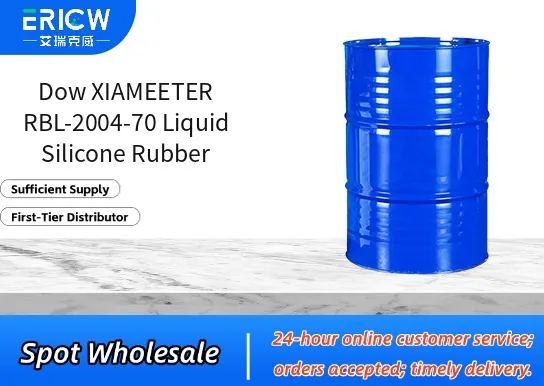
High biocompatibility compliant with ISO 10993 and USP Class VI requirements
Excellent flowability and low viscosity for precise mold filling and intricate part replication
Fast, consistent platinum-catalyzed cure at room temperature or elevated temperatures
Outstanding thermal stability with continuous service capability up to 200 °C
Low compression set and superior elasticity retention after prolonged deformation
Medical-grade tubing and catheters for minimally invasive devices
Seals, gaskets, and diaphragms in pharmaceutical processing equipment
Soft-touch overmolding on medical instrument housings and wearable sensors
Custom silicone components for diagnostic and drug delivery systems
Food-contact compliant parts meeting FDA 21 CFR 177.2600 requirements
| Chemical Type | Platinum-cured addition-cure liquid silicone rubber (LSR) |
| Product Form | Two-part liquid system (Part A + Part B) |
| Appearance | Translucent, low-viscosity liquid (Part A); translucent liquid catalyst (Part B) |
| Primary Applications | Medical devices, pharmaceutical equipment, food-contact components |
| Key Features | Biocompatible, low extractables, excellent dimensional stability |
| Benefits | Reduced post-cure requirements, high batch-to-batch consistency, clean processing |
| Cure System | Pt-catalyzed hydrosilylation (addition reaction) |
| Shelf Life | 12 months unopened at ≤25 °C |
Q1: What is the typical cure mechanism for RBL-2004-70?
A: RBL-2004-70 is a platinum-catalyzed addition-cure liquid silicone rubber. It cures rapidly at elevated temperatures via hydrosilylation between vinyl and Si–H functional groups, with minimal by-products and excellent thermal stability.
Q2: Is RBL-2004-70 suitable for medical or food-contact applications?
A: RBL-2004-70 is formulated to meet general biocompatibility expectations for elastomeric silicone materials. End-use compliance with regulatory requirements—including ISO 10993, USP Class VI, or FDA 21 CFR Part 177.2350—must be verified through full system testing and validation under actual processing and service conditions.
Q3: How should RBL-2004-70 be handled to avoid inhibition during processing?
A: Platinum catalysts are sensitive to contamination. Avoid contact with sulfur-, nitrogen-, phosphorus-, or tin-containing compounds—including certain release agents, pigments, adhesives, and ambient volatiles. Use dedicated, clean equipment and maintain strict material segregation practices.
Q4: What viscosity range can be expected, and how does it affect processing?
A: RBL-2004-70 exhibits low-to-medium viscosity in its base and catalyst components, supporting efficient mixing, degassing, and mold filling—especially in precision liquid injection molding (LIM) applications. Viscosity may vary slightly with temperature and shear history, so thermal conditioning before metering is recommended for consistent flow behavior.
Q5: Can RBL-2004-70 be colored or filled without compromising performance?
A: Yes—RBL-2004-70 is compatible with platinum-safe pigments and inert fillers. However, any additive must be rigorously screened for catalytic inhibition or unintended side reactions. Performance attributes such as elongation, tear strength, and cure kinetics may shift depending on loading level and dispersion quality.
Contact With Us:
E-mail: wangxingqiang@ericwchem.com
Have a Questions? Call Us:
Add:
Building A1, Jiete Industrial Park, Huangpu District, Guangzhou City, Guangdong Province, China