English
 Español
 tiếng việt
 русский
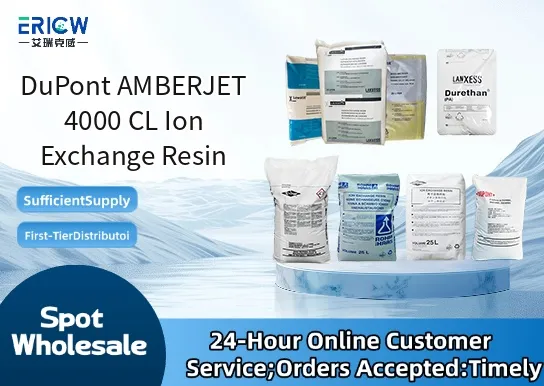
High-capacity, gel-type strong base anion exchange resin in chloride form.
Optimized for high-efficiency removal of silica, sulfate, nitrate, and other anionic contaminants.
Excellent physical and chemical stability with low attrition loss during hydraulic cycling.
Consistent particle size distribution ensures uniform flow dynamics and minimized pressure drop.
Manufactured under strict quality control to meet ASTM D2179 and ISO 9001 standards.
Polishing of high-purity water in power plant boiler feedwater systems.
Final anion removal in pharmaceutical-grade purified water (PW) and water for injection (WFI) systems.
Ultrapure water production for semiconductor manufacturing and microelectronics rinsing.
Deionization in laboratory and analytical instrument feedwater applications.
Industrial process water treatment requiring low conductivity and minimal silica breakthrough.
| Chemical Type | Strong Base Anion (Type I) |
| Product Form | Chloride Form |
| Appearance | Amber, spherical beads |
| Functional Group | Quaternary ammonium |
| Moisture Content | 46 – 50% (as shipped) |
| Particle Size Range | 0.3 – 1.2 mm |
| Uniformity Coefficient | ≤ 1.6 |
| Maximum Temperature | 60 °C (140 °F) |
Q1: What is the primary function of AMBERJET 4000 CL in water treatment systems?
A: AMBERJET 4000 CL is a strong base anion exchange resin in the chloride form, designed primarily for demineralization and dealkalization in mixed-bed and separate-bed ion exchange systems. It effectively removes anionic contaminants such as sulfate, nitrate, silica, and bicarbonate from process and ultrapure water streams.
Q2: How does AMBERJET 4000 CL differ from gel-type anion resins?
A: AMBERJET 4000 CL is a macroporous (macroreticular) resin with a highly crosslinked polystyrene matrix, offering superior physical stability, faster kinetics, and better resistance to organic fouling and osmotic shock compared to conventional gel-type anion resins—making it especially suitable for challenging feedwaters with variable quality or higher organic content.
Q3: Can AMBERJET 4000 CL be used in high-purity water applications such as semiconductor or pharmaceutical manufacturing?
A: Yes—it is widely specified in high-purity water systems where low total organic carbon (TOC) leachables, high regeneration efficiency, and consistent effluent quality are critical. Its macroporous structure and optimized manufacturing process support low extractables and reliable performance in mixed-bed polishing configurations.
Q4: What regeneration chemicals are recommended for AMBERJET 4000 CL?
A: Sodium hydroxide (NaOH) is the standard regenerant for restoring the resin to the chloride form. Optimal regeneration efficiency depends on NaOH concentration, temperature, flow rate, and contact time—typically aligned with industry best practices for macroporous strong base anion resins.
Contact With Us:
E-mail: wangxingqiang@ericwchem.com
Have a Questions? Call Us:
Add:
Building A1, Jiete Industrial Park, Huangpu District, Guangzhou City, Guangdong Province, China