English
 Español
 tiếng việt
 русский
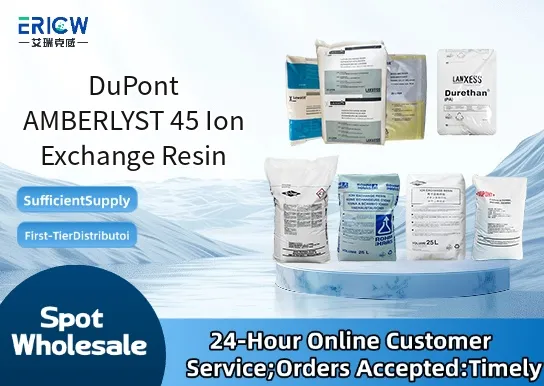
Highly crosslinked macroreticular styrene-divinylbenzene copolymer matrix for superior mechanical and thermal stability.
Sulfonic acid functional groups providing strong acidity and high ion exchange capacity (≥ 4.7 meq/mL in H⁺ form).
Optimized particle size distribution (0.3–1.2 mm) for low pressure drop and excellent flow dynamics in fixed-bed reactors.
Exceptional resistance to organic fouling and thermal degradation up to 120 °C in continuous service.
Regenerable with dilute mineral acids, enabling long service life and cost-effective process cycles.
Esterification and transesterification reactions, including biodiesel production (FAME synthesis).
Hydration of olefins to produce fuel-grade alcohols (e.g., tert-butanol from isobutylene).
Hydrolysis of esters, nitriles, and acetals in fine chemical and pharmaceutical intermediate synthesis.
Alkylation reactions requiring strong Brønsted acidity under mild conditions.
Removal of trace acidic impurities in solvent purification and monomer refining streams.
| Chemical Type | Strongly acidic cation exchange resin (sulfonated polystyrene-divinylbenzene) |
| Product Form | Moist, hydrogen-form beads |
| Appearance | Opaque amber to brown spherical beads |
| Ion Exchange Capacity (H⁺ form) | ≥ 4.7 meq/mL (dry basis) |
| Moisture Content | 45–55% (as shipped) |
| Uniformity Coefficient | ≤ 1.8 |
| Maximum Operating Temperature | 120 °C (continuous), 130 °C (short-term) |
| pH Stability Range | 0–14 (non-oxidizing environments) |
Q1: What is the primary functional group and matrix type of AMBERLYST 45?
A: AMBERLYST 45 is a macroporous, strongly acidic cation exchange resin based on a styrene-divinylbenzene copolymer matrix, with sulfonic acid (–SO₃H) functional groups.
Q2: How does AMBERLYST 45 differ from gel-type strong acid resins in terms of performance?
A: Unlike gel-type resins, AMBERLYST 45’s macroporous structure provides superior stability under thermal stress, resistance to organic fouling, and consistent performance across a wide pH and temperature range—making it especially suitable for demanding catalytic applications such as esterifications and etherifications.
Q3: Can AMBERLYST 45 be used in continuous fixed-bed reactors?
A: Yes—AMBERLYST 45 is specifically engineered for robust mechanical strength and low pressure drop, enabling reliable long-term operation in continuous fixed-bed, packed-column, or trickle-bed reactor configurations commonly used in fine chemical and pharmaceutical synthesis.
Q4: Is AMBERLYST 45 regenerable, and what are typical regeneration considerations?
A: As a heterogeneous solid acid catalyst, AMBERLYST 45 is generally operated as a non-regenerated, single-pass catalyst in most industrial processes. While acid washing or solvent rinsing may restore partial activity in select cases, thermal degradation and fouling often limit practical regeneration cycles—so end-of-life replacement is standard practice.
Contact With Us:
E-mail: wangxingqiang@ericwchem.com
Have a Questions? Call Us:
Add:
Building A1, Jiete Industrial Park, Huangpu District, Guangzhou City, Guangdong Province, China