English
 Español
 tiếng việt
 русский
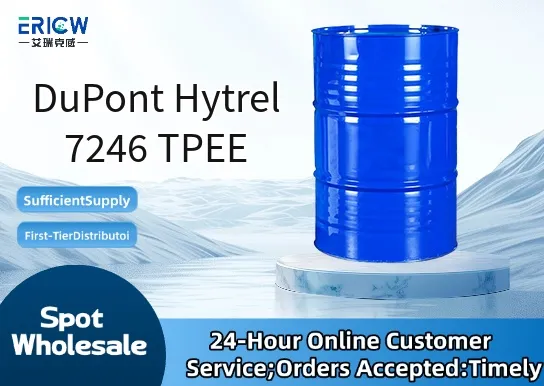
Excellent balance of thermoplastic processability and elastomeric performance.
High resistance to oil, grease, and many automotive fluids.
Outstanding dynamic fatigue resistance and long-term flex life.
Good dimensional stability across a wide service temperature range (–40 °C to +150 °C).
Low compression set retention under repeated mechanical stress.
Automotive air ducts and HVAC components.
Fuel system connectors and vapor recovery parts.
Powertrain mounts and vibration-damping bushings.
Industrial hydraulic hose covers and fluid-handling tubing.
Consumer appliance seals requiring high-cycle durability.
| Chemical Type | Thermoplastic Polyester Elastomer (TPEE) |
| Product Form | Pellets |
| Appearance | Off-white to light tan, free-flowing pellets |
| Primary Applications | Dynamic sealing, fluid handling, under-hood automotive components |
| Key Features | Oil resistance, fatigue endurance, thermal stability |
| Processing Method | Injection molding, extrusion, blow molding |
| Density (ASTM D792) | 1.18 g/cm³ |
| Melt Flow Rate (ASTM D1238, 230 °C/2.16 kg) | 15 g/10 min |
Q1: What distinguishes Hytrel 7246 from other TPEE grades in the Hytrel portfolio?
A: Hytrel 7246 is a medium-hardness thermoplastic elastomer with balanced stiffness and flexibility, offering enhanced melt flow and improved processability compared to higher-hardness grades—making it especially suitable for thin-wall injection molding and complex geometries.
Q2: Is Hytrel 7246 suitable for applications requiring repeated flexing or dynamic mechanical stress?
A: Yes—Hytrel 7246 exhibits excellent fatigue resistance and long-term resilience under cyclic loading, which supports reliable performance in components such as automotive bellows, power tool grips, and sporting goods hinges.
Q3: Can Hytrel 7246 be overmolded onto common engineering plastics like ABS or PC?
A: Yes—Hytrel 7246 demonstrates good adhesion to many rigid thermoplastics when processed under appropriate temperature and mold surface conditions, though optimal bonding typically requires validation through application-specific testing.
Q4: How does Hytrel 7246 perform in environments with exposure to oils, greases, or mild chemicals?
A: Hytrel 7246 maintains good resistance to non-polar fluids—including mineral oils, greases, and many hydrocarbon-based substances—though prolonged contact with strong polar solvents or oxidizing agents should be evaluated case by case.
Contact With Us:
E-mail: wangxingqiang@ericwchem.com
Have a Questions? Call Us:
Add:
Building A1, Jiete Industrial Park, Huangpu District, Guangzhou City, Guangdong Province, China