English
 Español
 tiếng việt
 русский
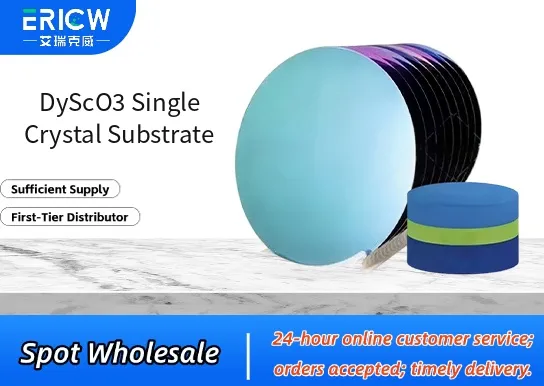
High-quality single-crystal structure with low dislocation density (< 1 × 10⁴ cm⁻²) and excellent crystalline homogeneity.
Orthorhombic perovskite lattice (space group Pbnm) enabling precise epitaxial growth of functional oxide thin films.
Thermal expansion coefficient closely matched to key functional oxides including YBCO, LCMO, and STO.
Chemically stable under standard thin-film deposition conditions (e.g., PLD, MBE, sputtering) up to 800 °C in oxidizing atmospheres.
Available with atomically flat, optically polished surfaces (Ra < 0.2 nm) and customizable orientations (e.g., (110), (001)).
Epitaxial growth of high-temperature superconducting thin films (e.g., YBa₂Cu₃O₇₋δ).
Platform for multiferroic heterostructures (e.g., BiFeO₃, TbMnO₃) requiring lattice-matched, insulating substrates.
Substrate for complex oxide spintronics devices, including manganite-based magnetic tunnel junctions.
Reference material in X-ray diffraction (XRD) calibration and structural phase transition studies.
Template for strain-engineered quantum well systems in correlated electron physics research.
| Chemical Type | Dysprosium Scandium Oxide (DyScO₃) |
| Product Form | Single crystal wafer (polished, oriented) |
| Crystal Structure | Orthorhombic, space group Pbnm |
| Typical Dimensions | 10 × 10 mm or 15 × 15 mm; thickness 0.5 mm ± 0.05 mm |
| Surface Finish | Double-side polished, Ra < 0.2 nm (AFM verified) |
| Primary Applications | Epitaxial thin-film growth, fundamental condensed matter research |
| Key Features | Lattice parameter a = 5.742 Å, b = 5.729 Å, c = 7.865 Å (RT); thermal expansion ~10.2 × 10⁻⁶ K⁻¹ (300–800 K) |
| Regulatory Compliance | REACH compliant; no SVHCs listed under current ECHA candidate list |
| Common Compatible Systems | Suitability |
| Pulsed Laser Deposition (PLD) systems | Highly Recommended – Stable under high-energy laser ablation in O₂ background; minimal target-substrate interdiffusion. |
| Molecular Beam Epitaxy (MBE) chambers | Recommended – Compatible with ultra-high vacuum (UHV ≤ 1 × 10⁻¹⁰ Torr) and substrate heating up to 800 °C. |
| Radiation-hardened XRD diffractometers | Suitable – Low intrinsic background scattering and high thermal stability enable high-resolution reciprocal space mapping. |
| Atomic Layer Deposition (ALD) reactors | Recommended – Chemically inert surface supports uniform nucleation of ALD precursors (e.g., TiCl₄, H₂O) at ≤300 °C. |
Q1: What is the CAS Registry Number for DyScO₃?
A: DyScO₃ does not have a unique CAS number as it is a stoichiometric mixed-metal oxide crystal; commercial single-crystal substrates are assigned product-specific identifiers rather than CAS registration due to absence of bulk chemical handling per REACH Annex V exemptions.
Q2: Is DyScO₃ subject to leaching or ion migration under humid or aqueous conditions during device processing?
A: No significant leaching occurs under ambient humidity or brief aqueous rinse (e.g., DI water ultrasonication); DyScO₃ exhibits negligible solubility (< 10⁻⁹ g/L in neutral water at 25 °C) and remains stable through standard clean protocols (RCA-1, piranha optional with caution).
Q3: How does DyScO₃ compare to STO (SrTiO₃) or LSAT (La₀.₃Sr₀.₇Al₀.₆₅Ta₀.₃₅O₃) as a substrate for YBCO films?
A: DyScO₃ offers superior lattice matching to YBCO (mismatch ~0.2% vs. ~1.2% for STO) and higher dielectric breakdown strength than LSAT; unlike LSAT, it contains no volatile La/Sr and avoids interfacial Sr segregation issues during high-temperature annealing.
Q4: Are there any export control restrictions (e.g., EAR99, ECCN) applicable to DyScO₃ substrates?
A: DyScO₃ single crystal substrates are classified as EAR99 under U.S. Export Administration Regulations; no license is required for most destinations, though end-use restrictions apply for military or nuclear applications per §744.3.
Contact With Us:
E-mail: wangxingqiang@ericwchem.com
Have a Questions? Call Us:
Add:
Building A1, Jiete Industrial Park, Huangpu District, Guangzhou City, Guangdong Province, China