English
 Español
 tiếng việt
 русский
Exceptional thermal stability with minimal phase decomposition up to 2100 °C.
High chemical inertness—resistant to molten metal corrosion, basic slags, and oxidizing atmospheres.
Low thermal expansion coefficient (≈7.6 × 10⁻⁶ K⁻¹) enabling superior thermal shock resistance.
Non-hygroscopic and dimensionally stable under humid or high-temperature cycling conditions.
Electrically insulating with high dielectric strength (>15 kV/mm), suitable for high-voltage refractory applications.
Refractory linings for steel ladles, tundishes, and RH degassers—especially where alumina-rich slag interaction must be minimized.
Crucibles and thermocouple protection tubes for high-purity metal melting (e.g., Ti, Ni-based superalloys).
Substrates and insulating components in high-temperature furnaces and kiln furniture.
Stabilized ceramic membranes and catalyst supports requiring acid–base neutrality and sintering resistance.
Advanced transparent ceramics for UV–IR optical windows and laser host matrices (when highly purified and hot-isostatically pressed).
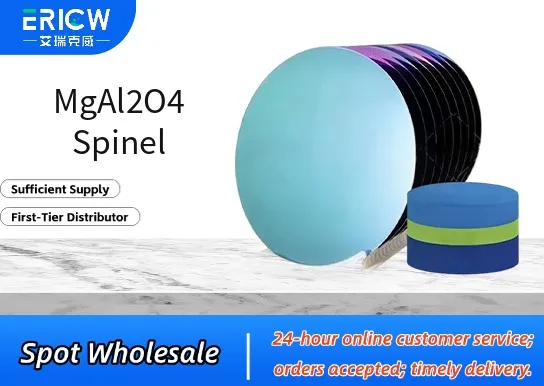
| Chemical Type | Magnesium aluminum oxide spinel (MgAl₂O₄), stoichiometric or slightly MgO-rich |
| Product Form | Fine powder (D₅₀ ≈ 0.8–1.5 µm), granules, or sintered shapes (customizable) |
| Appearance | White to off-white free-flowing crystalline powder or dense ceramic body |
| Melting Point | 2135 °C (decomposition onset > 2100 °C in air) |
| Primary Applications | Refractories, high-temp insulation, optical ceramics, catalyst carriers |
| Key Features | Spinel crystal structure (cubic, space group Fd3m), no polymorphic transitions below melting point |
| Benefits | Reduces alumina dissolution in basic slags; eliminates disruptive MgO hydration in service |
| Regulatory Compliance | REACH registered; RoHS compliant; no SVHCs above threshold per EU Annex XIV |
| Common Compatible Systems | Suitability |
| Basic refractory systems (e.g., MgO–CaO, dolomite) | Highly Recommended – Chemically compatible; suppresses deleterious spinel formation at interfaces |
| Alumina-based refractories (e.g., Al₂O₃–ZrO₂, Al₂O₃–SiO₂) | Recommended – Low reactivity; avoids low-melting eutectics common with MgO additives |
| Oxidizing high-temperature atmospheres (air, O₂, CO₂) | Highly Recommended – Stable oxidation state; no redox degradation |
| Reducing atmospheres (e.g., H₂, CO, vacuum) | Suitable – Maintains structural integrity below 1400 °C; prolonged exposure may induce minor oxygen vacancy formation |
Q1: What is the CAS Registry Number for MgAl2O4 Spinel?
A: The CAS number for magnesium aluminum oxide spinel is 12091-44-2.
Q2: Is MgAl2O4 Spinel subject to migration or leaching in contact with aqueous or acidic media?
A: MgAl2O4 exhibits negligible solubility in neutral and weakly acidic water (<0.1 ppm Al/Mg after 24 h at 25 °C, per ASTM C724); however, strong mineral acids (e.g., concentrated HCl, H₂SO₄) at elevated temperature may cause slow surface dissolution.
Q3: How does MgAl2O4 Spinel compare to fused magnesia (MgO) or calcined alumina (Al₂O₃) in refractory performance?
A: Unlike MgO, MgAl2O4 is non-hygroscopic and avoids destructive brucite formation; unlike Al₂O₃, it resists reaction with CaO/SiO₂ slags and offers better thermal shock resistance due to lower thermal expansion and higher fracture toughness.
Q4: Does MgAl2O4 Spinel require special handling or regulatory documentation for global shipment?
A: It is classified as non-hazardous under GHS/UN transport regulations; SDS, REACH dossier, and export compliance statements (e.g., EAR99) are available upon request.
Contact With Us:
E-mail: wangxingqiang@ericwchem.com
Have a Questions? Call Us:
Add:
Building A1, Jiete Industrial Park, Huangpu District, Guangzhou City, Guangdong Province, China