English
 Español
 tiếng việt
 русский
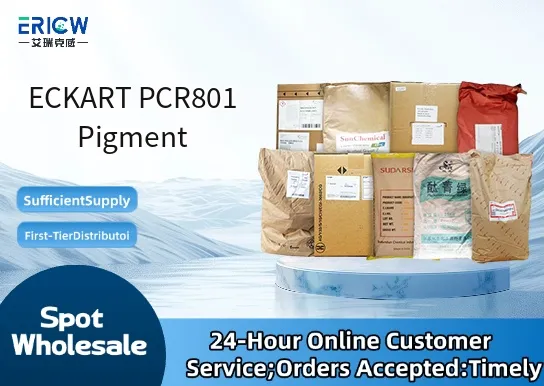
Highly reflective aluminum flake pigment with excellent brightness and metallic effect.
Optimized particle size distribution for superior orientation and smooth film formation in coatings.
Surface-treated for enhanced compatibility with solvent-based and high-solids resin systems.
Good chemical resistance and thermal stability up to 200 °C in inert environments.
Low dusting formulation ensures improved workplace safety and handling efficiency.
Automotive OEM and refinish coatings requiring high-gloss metallic appearance.
Industrial maintenance coatings for machinery, appliances, and metal furniture.
Plastic coloration for exterior automotive components and durable consumer goods.
Printing inks for premium packaging and decorative laminates.
Architectural coatings including metallic-effect façade paints and coil coatings.
| Chemical Type | Aluminum pigment (leafing type) |
| Product Form | Paste in mineral spirits (solvent-based) |
| Appearance | Grayish-silver paste with metallic sheen |
| Primary Applications | Coatings, inks, and plastics requiring leafing metallic effect |
| Key Features | Leafing behavior, high reflectivity, good dispersion stability |
| Recommended Solvent | Aromatic hydrocarbons or aliphatic naphtha |
| Storage Conditions | Store in tightly sealed containers at 15–25 °C, avoid freezing |
| Shelf Life | 24 months from date of manufacture under proper storage |
Q1: What is the primary function of ECKART PCR801 Pigment in polymer systems?
A: ECKART PCR801 is a high-performance pearlescent pigment designed to deliver bright, metallic luster and excellent lightfastness in thermoplastic and thermoset polymers. It enhances visual appeal while maintaining good dispersion stability and processability during compounding and molding.
Q2: Is PCR801 suitable for food-contact or medical-grade plastic applications?
A: PCR801 is formulated for use in general-purpose industrial plastics. While it complies with common regulatory frameworks for non-food-contact applications, it is not pre-qualified for direct food-contact or implantable medical devices. Customers must conduct full regulatory validation—including migration testing and biocompatibility assessment—according to their specific end-use requirements and regional regulations.
Q3: How should PCR801 be incorporated into polymer melts?
A: For optimal performance, PCR801 is typically introduced via masterbatch dilution or direct addition during extrusion. Pre-mixing with carrier resin is recommended to ensure uniform distribution. Avoid excessive shear or prolonged residence time at elevated temperatures to preserve particle integrity and optical effect.
Q4: Does PCR801 require surface treatment for compatibility with engineering resins?
A: PCR801 is supplied with a proprietary inorganic surface coating optimized for broad compatibility with polyolefins, polyesters, polycarbonates, and ABS. Additional surface modification is generally unnecessary unless targeting highly polar or reactive matrices—consult ECKART technical support for formulation-specific guidance.
Contact With Us:
E-mail: wangxingqiang@ericwchem.com
Have a Questions? Call Us:
Add:
Building A1, Jiete Industrial Park, Huangpu District, Guangzhou City, Guangdong Province, China