English
 Español
 tiếng việt
 русский
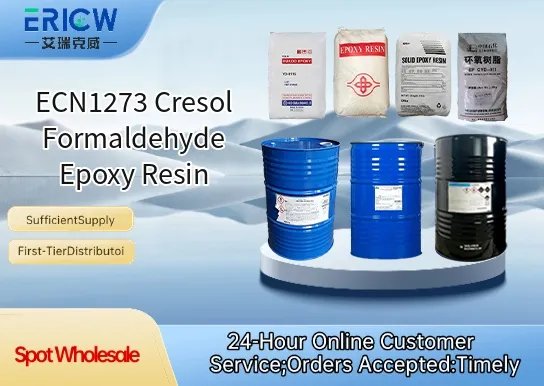
High thermal stability and excellent glass transition temperature (Tg) for demanding high-temperature applications.
Superior chemical resistance, especially to acids, alkalis, and organic solvents.
Low ionic impurity content, ensuring high electrical insulation performance and reliability in electronic encapsulation.
Excellent adhesion to metals, ceramics, and reinforced substrates without requiring surface priming.
Controlled molecular weight distribution enabling consistent reactivity and predictable curing behavior.
Encapsulation and potting of semiconductor devices and integrated circuits (ICs).
Manufacturing of high-performance printed circuit board (PCB) laminates and prepregs.
Structural adhesives for aerospace and automotive composite bonding.
Electrical insulating varnishes and coil coatings for motors and transformers.
High-reliability molding compounds for power electronics modules.
| Chemical Type | Cresol-formaldehyde novolac epoxy resin |
| Product Form | Pale yellow to amber solid pellets or flakes |
| Appearance | Free-flowing, homogeneous solid with no visible impurities |
| Epoxy Equivalent Weight (EEW) | 180–195 g/eq |
| Softening Point | 85–95 °C |
| Viscosity (150 °C, molten) | 8,000–12,000 mPa·s |
| Chlorine Content | < 800 ppm |
| Volatile Matter | < 0.5 wt% |
Q1: What distinguishes ECN1273 from standard bisphenol-A epoxy resins?
A: ECN1273 is a novolac-type epoxy resin derived from cresol-formaldehyde condensates, offering significantly higher functionality, thermal stability, and chemical resistance compared to conventional bisphenol-A epoxies. Its multi-epoxy structure enables enhanced crosslink density in cured systems, making it especially suitable for demanding high-performance applications such as aerospace composites and electronic encapsulants.
Q2: Is ECN1273 compatible with common epoxy hardeners?
A: Yes — ECN1273 is compatible with a broad range of amine-based hardeners (e.g., aromatic diamines, dicyandiamide), anhydrides, and phenolic resins. Due to its higher epoxy equivalent weight and multifunctionality, cure schedules often require elevated temperatures and may benefit from catalytic acceleration. Formulators should conduct compatibility and reactivity testing under intended processing conditions.
Q3: How does ECN1273 perform in high-temperature applications?
A: When properly cured, ECN1273-based systems exhibit excellent thermal stability, with glass transition temperatures (Tg) typically exceeding 180 °C and long-term service capability above 150 °C. Its rigid aromatic backbone and dense crosslink network contribute to retained mechanical integrity and low thermal expansion in elevated-temperature environments.
Q4: Can ECN1273 be used in electrically insulating formulations?
A: Yes — fully cured ECN1273 systems demonstrate high dielectric strength and volume resistivity, making them well-suited for electrical insulation, potting compounds, and semiconductor packaging. Performance depends on formulation purity, filler selection, and absence of ionic contaminants during processing.
Contact With Us:
E-mail: wangxingqiang@ericwchem.com
Have a Questions? Call Us:
Add:
Building A1, Jiete Industrial Park, Huangpu District, Guangzhou City, Guangdong Province, China