English
 Español
 tiếng việt
 русский
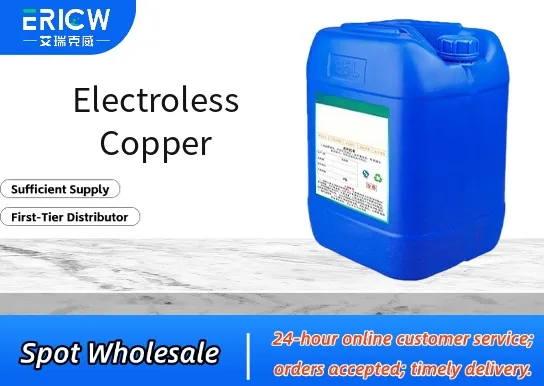
Autocatalytic deposition enables uniform copper coating on non-conductive substrates without external current.
Excellent throwing power ensures consistent thickness distribution even in high-aspect-ratio vias and complex geometries.
High-purity metallic copper deposit with low porosity and strong adhesion to diverse base materials (e.g., epoxy, polyimide, ceramics).
Stable bath chemistry with extended operational life and minimal sludge formation under controlled process conditions.
Enables direct metallization of plastics and composites—critical for advanced PCB and semiconductor packaging fabrication.
Primary metallization layer for multilayer printed circuit boards (PCBs) prior to electroplating.
Through-hole plating and via filling in HDI (High-Density Interconnect) and IC substrate manufacturing.
Metallization of 3D-printed polymer components for EMI shielding and functional circuit integration.
Surface activation and conductive seeding for flexible electronics and wearable sensor substrates.
Pre-treatment for electroless nickel–copper or copper–cobalt alloy deposition in specialty coatings.
| Chemical Type | Alkaline aqueous solution containing copper(II) sulfate, formaldehyde (reducing agent), chelating agents (e.g., EDTA), and stabilizers |
| Product Form | Liquid concentrate (typically supplied as multi-component kit: A-solution, B-solution, and accelerator) |
| Appearance | Clear to slightly opalescent, blue-green aqueous solution (component-dependent) |
| pH Range (Working Bath) | 12.0 – 12.8 (adjusted with sodium hydroxide) |
| Operating Temperature | 55 – 65 °C |
| Deposition Rate | 10 – 25 µm/h (dependent on bath activity, temperature, and loading) |
| Primary Applications | Non-electrolytic copper plating for PCBs, IC substrates, and engineered plastics |
| Regulatory Compliance | REACH compliant; RoHS 2015/863 Annex II compliant (lead-free); SDS available per GHS Rev. 7 |
| Common Compatible Systems | Suitability |
| Pretreatment: Acidic cleaner & micro-etch (e.g., sulfuric-peroxide) | Highly Recommended – Ensures optimal surface activation and oxide removal on copper-clad laminates |
| Activation: Colloidal palladium-tin catalyst system | Highly Recommended – Provides uniform catalytic nuclei for reliable initiation on non-conductors |
| Post-plating: Mild alkaline neutralizer + DI water rinse | Recommended – Prevents residual alkali carryover and minimizes oxidation before electroplating |
| Compatibility with standard PCB line conveyors (PP, PVDF, stainless steel) | Suitable – No corrosion observed under continuous immersion at operating temperature |
Q1: What is the CAS Registry Number for Electroless Copper bath components?
A: Electroless copper is a multi-component formulation; key constituents include Copper(II) sulfate pentahydrate (CAS 7758-99-8), Formaldehyde (CAS 50-00-0), and Sodium hydroxide (CAS 1310-73-2). Full component listing and concentrations are provided in the Safety Data Sheet (SDS).
Q2: How much Electroless Copper solution is typically consumed per square meter of plated surface?
A: Average chemical consumption ranges from 0.8–1.5 L/m² for a 1.5–2.0 µm deposit, depending on bath age, drag-out control, and racking efficiency. Optimized counterflow rinses and reclaim systems can reduce net usage by up to 40%.
Q3: How does Electroless Copper differ from electrolytic copper plating in terms of performance and use case?
A: Electroless copper deposits uniformly without current density gradients—enabling metallization of insulators and high-aspect-ratio features unsuitable for electrolytic processes. Electrolytic copper requires conductive seed layers and exhibits thickness variation across complex topographies.
Q4: Are there restrictions on metal ion migration or leaching from Electroless Copper deposits in end-use applications?
A: Deposits exhibit low ionic mobility when fully cured and post-treated. Per IPC-4552B, qualified electroless copper layers show <0.5 ppm Cu extraction in 72-hr 95°C deionized water immersion testing—meeting requirements for high-reliability automotive and medical electronics.
Contact With Us:
E-mail: wangxingqiang@ericwchem.com
Have a Questions? Call Us:
Add:
Building A1, Jiete Industrial Park, Huangpu District, Guangzhou City, Guangdong Province, China