English
 Español
 tiếng việt
 русский
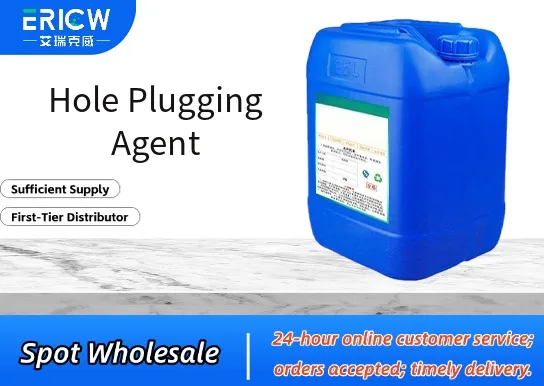
Fast-setting, thermally stable polymer matrix for rapid void sealing under ambient to elevated temperatures.
Low viscosity pre-application form enables deep penetration into micro-cracks and capillary channels.
Non-shrinking formulation ensures long-term dimensional integrity and pressure-tight performance.
Chemically inert post-cure — resistant to hydrocarbons, mild acids, and alkaline process fluids.
Halogen-free and low-VOC compliant, supporting industrial EHS and sustainability requirements.
Sealing pinholes and porosity in cast aluminum and magnesium engine blocks and cylinder heads.
Repairing leak paths in high-pressure hydraulic manifolds and valve bodies prior to final machining.
Blocking unintended through-holes in heat exchanger tube sheets during brazing or welding preparation.
Temporary plugging of test ports and calibration orifices during functional validation of fluid systems.
Preventing media ingress during electroplating, anodizing, or chemical passivation of precision machined parts.
| Chemical Type | Epoxy-acrylate hybrid resin system |
| Product Form | Two-component liquid (Part A: resin, Part B: amine-accelerated initiator) |
| Appearance | Part A: pale amber transparent liquid; Part B: light yellow viscous liquid |
| Mix Ratio (by volume) | 10:1 (A:B) |
| Working Time (25°C) | 25–35 minutes |
| Full Cure Time (25°C) | 24 hours (mechanical stability achieved in 6 hours) |
| Primary Applications | Permanent/semi-permanent sealing of metallic casting defects and engineered voids |
| Regulatory Compliance | REACH SVHC-free; RoHS 2015/863 compliant; OSHA HazCom 2012 SDS available |
| Common Compatible Systems | Suitability |
| Aluminum Die-Cast Alloys (e.g., A380, ADC12) | Highly Recommended – Excellent adhesion and thermal cycling resistance up to 150°C |
| Magnesium AZ91D Components | Recommended – Requires surface pretreatment with chromate-free conversion coating |
| Stainless Steel 316 Manifolds | Suitable – Good bond strength; avoid prolonged exposure to >180°C steam environments |
| Brass and Copper-Zinc Alloys | Recommended – Effective sealant; not intended for potable water contact without third-party validation |
Q1: What is the CAS Registry Number for this Hole Plugging Agent?
A: This is a proprietary multi-component formulation; individual components have CAS numbers (e.g., Part A base resin: 7085-85-0; Part B initiator: 67-56-1), but the blended product is not assigned a single CAS number per IUPAC guidelines.
Q2: What is the typical dosage range per unit area or volume?
A: Application is defect-driven, not area-based. Typical consumption is 0.15–0.40 g per mm³ of void volume. For reference: 100 g fills ~250 mm³ of average porosity (e.g., 5 mm × 5 mm × 10 mm cavity).
Q3: How does it differ from conventional anaerobic sealants?
A: Unlike oxygen-inhibited anaerobics, this agent cures via dual-mechanism (air-stable initiation + thermal acceleration), enabling reliable cure in blind holes, non-metallic substrates, and variable gap geometries where anaerobics often fail.
Q4: Is migration or extractable residue a concern in food-contact or pharmaceutical applications?
A: Not approved for direct food- or pharmaceutical-contact use. Fully cured material shows <0.5 ppm total extractables in aqueous simulants (FDA 21 CFR §175.300 testing protocol), but formal FDA or EFSA clearance is not held.
Contact With Us:
E-mail: wangxingqiang@ericwchem.com
Have a Questions? Call Us:
Add:
Building A1, Jiete Industrial Park, Huangpu District, Guangzhou City, Guangdong Province, China