English
 Español
 tiếng việt
 русский
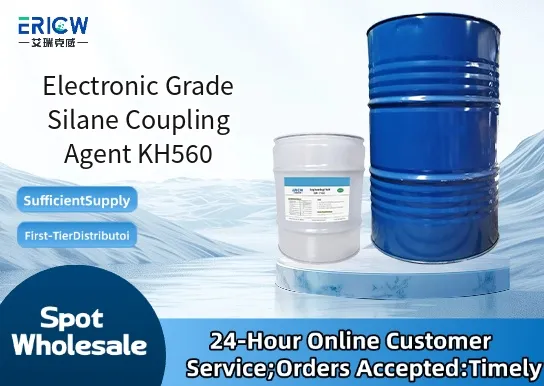
Ultra-low ionic impurities (Na⁺, K⁺, Cl⁻, SO₄²⁻ < 1 ppm) meeting stringent electronic-grade purity requirements.
High hydrolytic stability with controlled reactivity—enables precise surface modification without premature gelation.
Triple functionality: epoxy group for covalent bonding to resins/polymers, alkoxy groups for silanol formation on inorganic surfaces, and silicon center for robust Si–O–Si network integration.
Low volatility and high thermal stability (decomposition onset > 220 °C), supporting high-temperature curing processes in microelectronics fabrication.
Consistent batch-to-batch reproducibility certified per IEC 60068-2 environmental stress screening protocols.
Surface treatment of silica fillers and glass fibers in high-frequency PCB laminates (e.g., ABF, BT, and polyimide substrates).
Adhesion promotion in wafer-level underfill and glob-top encapsulants for advanced packaging (Fan-Out WLP, 2.5D/3D IC).
Interface engineering in dielectric layers for MEMS sensors and RF front-end modules requiring ultra-low signal loss.
Functionalization of ceramic substrates (Al₂O₃, AlN) prior to metallization or polymer coating in power electronics modules.
Stabilizer in colloidal silica dispersions used in CMP slurries for advanced node logic and memory device manufacturing.
| Chemical Type | γ-Glycidoxypropyltrimethoxysilane (epoxy-functional alkoxysilane) |
| Product Form | Clear, colorless to pale yellow liquid |
| Appearance | Homogeneous, free from visible particles or haze |
| Density (25 °C) | 1.070–1.085 g/cm³ |
| Refractive Index (25 °C) | 1.428–1.432 |
| Primary Applications | Electronic packaging, high-frequency substrate adhesion, dielectric interface control |
| Key Features | Electronic-grade purity, low metal ion content, hydrolysis-controlled reactivity |
| Regulatory Compliance | RoHS 2015/863 compliant; REACH SVHC-free; ISO 9001 & ISO 14001 certified manufacturing |
| Common Compatible Systems | Suitability |
| Epoxy-based underfills and molding compounds | Highly Recommended – Forms stable covalent bonds with epoxy matrix and filler interfaces |
| Acid-catalyzed phenolic resins (e.g., novolac-type PCB binders) | Recommended – Requires mild thermal activation; compatible with standard lamination profiles |
| Aqueous colloidal silica dispersions (pH 9–10) | Suitable – Enables stable silane grafting without rapid condensation; use within 4 hrs post-dilution |
| Polyimide precursor solutions (PAA) | Highly Recommended – Enhances interfacial adhesion between polyimide films and copper or ceramic substrates |
Q1: What is the CAS Registry Number for KH560?
A: The CAS Number for γ-glycidoxypropyltrimethoxysilane (KH560) is 2530-83-8.
Q2: What is the recommended dosage range for KH560 in electronic encapsulants?
A: Typical loading is 0.3–1.2 wt% relative to total formulation solids; optimal level depends on filler type, surface area, and cure profile—validated via FTIR loss-on-modification and shear adhesion testing.
Q3: How does KH560 compare to KH550 in high-frequency applications?
A: KH560 offers superior dielectric stability vs. amino-silane KH550 due to absence of polar amine groups—reducing moisture absorption and minimizing εᵣ/loss tangent drift at GHz frequencies.
Q4: Is KH560 subject to migration or leaching in humid operating environments?
A: When fully cured, KH560 forms hydrolytically stable Si–O–substrate and C–O–epoxy crosslinks; validated per JEDEC JESD22-A101 humidity testing shows no measurable extractables after 1000 hrs at 85 °C/85% RH.
Q5: Does KH560 require special handling or storage conditions?
A: Store unopened containers under nitrogen at 5–25 °C, protected from moisture and direct sunlight; shelf life is 12 months from date of manufacture when stored per specification.
Contact With Us:
E-mail: wangxingqiang@ericwchem.com
Have a Questions? Call Us:
Add:
Building A1, Jiete Industrial Park, Huangpu District, Guangzhou City, Guangdong Province, China