English
 Español
 tiếng việt
 русский
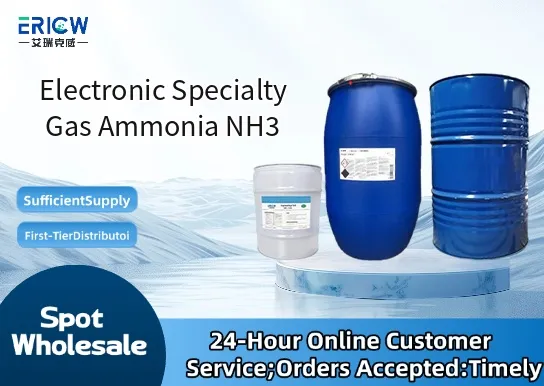
Ultra-high purity (99.9999% / 6N) with stringent control of metallic impurities (<1 ppt) and particulates.
Manufactured and packaged under Class 10 cleanroom conditions with electropolished stainless-steel (EP-SS) cylinders and VCR® fittings.
Consistent batch-to-batch reproducibility certified via GC-TCD, FTIR, and ICP-MS analytical verification.
Low moisture content (<0.1 ppmv H₂O) and oxygen content (<0.1 ppmv O₂) to prevent oxide formation during thin-film deposition.
Traceability compliant with SEMI S2/S8 and ISO 9001:2015 quality management standards.
Chemical vapor deposition (CVD) of silicon nitride (Si₃N₄) and silicon oxynitride (SiON) dielectric layers.
Plasma-enhanced CVD (PECVD) for passivation and etch-stop layers in advanced logic and memory devices.
Nitridation of gate oxides and high-k dielectrics (e.g., HfO₂) in sub-7nm FinFET and GAA transistor fabrication.
In-situ doping of GaN-based power electronics and RF semiconductor epitaxial growth.
Atomic layer deposition (ALD) precursor for metal nitride barriers (e.g., TiN, TaN) in Cu interconnect integration.
| Chemical Type | Inorganic specialty gas |
| Product Form | Compressed liquefied gas (cylinder supply) |
| Appearance | Colorless gas with pungent odor; forms white fumes in moist air |
| Melting Point | −77.7 °C |
| Boiling Point | −33.3 °C |
| Primary Applications | Semiconductor CVD/PECVD/ALD, LED epitaxy, flat-panel display manufacturing |
| Key Features | 6N purity (99.9999%), <1 ppt metals, <0.1 ppmv H₂O/O₂, particle-free packaging |
| Regulatory Compliance | SEMI C12 (gas purity), SEMI S2 (safety), REACH, RoHS 3, TSCA registered |
| Common Compatible Systems | Suitability |
| Applied Materials Centura® PECVD Platform | Highly Recommended – Validated for SiNₓ deposition at 250–400 °C |
| Lam Research Kiyo® CVD System | Highly Recommended – Certified for low-temperature nitridation processes |
| Tokyo Electron (TEL) Unity™ ADL Platform | Recommended – Requires standard NH₃ gas delivery module calibration |
| ASM International Eagle® XP8 ALD Tool | Suitable – Compatible with thermal and plasma ALD cycles for TiN/TaN |
Q1: What is the CAS Number for Electronic Specialty Gas Ammonia NH3?
A: The CAS Registry Number is 7664-41-7, consistent across all grades; electronic grade retains full traceability to this identifier.
Q2: How does usage volume differ between electronic-grade and industrial-grade ammonia?
A: Electronic-grade NH₃ is consumed in microgram-to-milligram quantities per wafer process step; typical tool consumption is 1–5 sccm during deposition, versus industrial-grade volumes measured in tons/hour for fertilizer production.
Q3: Is Electronic Specialty Gas Ammonia NH3 compatible with hydrogen or nitrogen carrier gases in blending systems?
A: Yes — fully compatible with ultra-high-purity H₂ (99.99999%) and N₂ (99.9999%) when delivered through dedicated, passivated stainless-steel manifolds; no reactive degradation observed under standard blending conditions.
Q4: Does this product meet USP or EP pharmacopeial requirements for semiconductor use?
A: No — it is not intended for pharmaceutical use; it complies exclusively with semiconductor-specific standards (SEMI, ISO 14644-1 Class 10, ASTM D7520) and excludes pharmacopeial monographs.
Q5: Can residual ammonia be extracted from chamber walls after process shutdown, and what mitigation is recommended?
A: Yes — NH₃ adsorbs on alumina and quartz surfaces; recommended mitigation includes extended N₂ purge (≥30 min at 20 slm) followed by low-power O₂ plasma ash to convert residual NH₃ to volatile NOₓ species.
Contact With Us:
E-mail: wangxingqiang@ericwchem.com
Have a Questions? Call Us:
Add:
Building A1, Jiete Industrial Park, Huangpu District, Guangzhou City, Guangdong Province, China