English
 Español
 tiếng việt
 русский
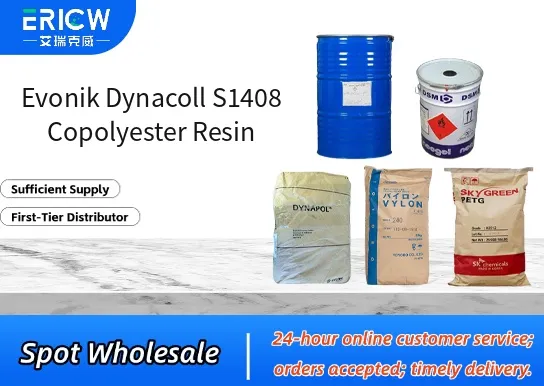
High thermal stability with excellent melt processability for extrusion and injection molding.
Good adhesion to polar substrates including PET, PA, and metal surfaces.
Low-temperature flexibility combined with high tensile strength and elongation at break.
Hydrolysis-resistant due to optimized ester linkage distribution and low acid number.
Designed for solvent-free and low-VOC adhesive and coating formulations.
Hot-melt adhesives for flexible packaging lamination.
Thermoplastic elastomer (TPE) modifiers in automotive interior trim.
Base resin for recyclable multilayer films requiring bond layer compatibility.
Functional binder in powder coatings for metal substrates.
Carrier resin for controlled-release agricultural granules.
| Chemical Type | Aliphatic-aromatic copolyester |
| Product Form | Pellets |
| Appearance | Off-white to pale yellow, free-flowing pellets |
| Melt Flow Rate (MFR, 230 °C / 2.16 kg) | 15–25 g/10 min |
| Softening Point (Vicat, 50 N) | 78–84 °C |
| Acid Number | ≤ 5 mg KOH/g |
| Density (23 °C) | 1.20–1.24 g/cm³ |
| Key Features | Good thermal stability, substrate adhesion, and hydrolytic resistance |
Q1: What is the primary function of Dynacoll S1408 in hot melt adhesive formulations?
A: Dynacoll S1408 is a reactive copolyester resin designed to enhance thermal stability, open time, and cohesive strength in high-performance reactive polyurethane (RPU) and polyamide-based hot melt adhesives, particularly for demanding industrial lamination and assembly applications.
Q2: Is Dynacoll S1408 compatible with common reactive hot melt systems?
A: Yes — it exhibits good compatibility with isocyanate-terminated polyurethane prepolymers and other thermoplastic polyesters used in reactive hot melt formulations. Its functional end groups support controlled crosslinking without premature gelation under standard processing conditions.
Q3: How does Dynacoll S1408 affect processing behavior during extrusion or coating?
A: It contributes to reduced melt viscosity at elevated temperatures while maintaining sufficient green strength upon cooling. This balance supports stable die flow, improved substrate wetting, and reduced stringing — especially in high-speed roll-to-roll operations.
Q4: Can Dynacoll S1408 be used in food-contact or medical-grade adhesive systems?
A: While not inherently restricted, suitability for regulated applications depends on the full formulation, final processing conditions, and compliance verification by the adhesive manufacturer. Evonik provides technical support for regulatory dossier development but does not issue blanket food-contact certifications for individual resins.
Q5: What storage and handling precautions are recommended for Dynacoll S1408?
A: Store in original sealed packaging at temperatures below 30 °C and protect from moisture and direct sunlight. Prolonged exposure to humid environments may lead to slight surface tackiness due to its inherent hydrophilicity; drying before processing is advised if hygroscopic uptake is suspected.
Contact With Us:
E-mail: wangxingqiang@ericwchem.com
Have a Questions? Call Us:
Add:
Building A1, Jiete Industrial Park, Huangpu District, Guangzhou City, Guangdong Province, China