English
 Español
 tiếng việt
 русский
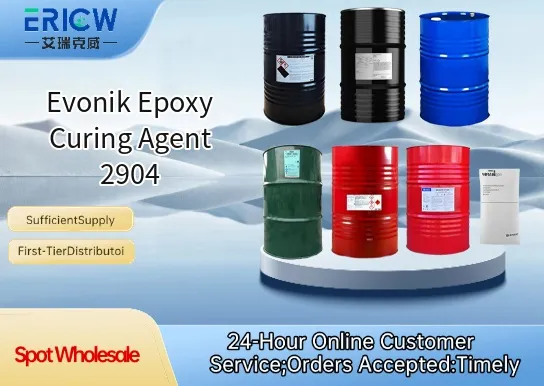
High reactivity with standard bisphenol-A and bisphenol-F epoxy resins.
Enables fast ambient-cure formulations without external heat input.
Delivers excellent chemical resistance, particularly to solvents and alkaline media.
Provides superior mechanical properties including high hardness and impact strength.
Low viscosity ensures easy handling, precise metering, and good flow/wetting in composite applications.
Structural adhesives for automotive and aerospace bonding.
High-performance coatings for industrial flooring and tank linings.
Electrical encapsulation and potting compounds for power electronics.
Wind turbine blade bonding and structural composites.
Precision tooling and mold-making materials requiring dimensional stability.
| Chemical Type | Aliphatic amine adduct |
| Product Form | Liquid |
| Appearance | Clear, pale yellow liquid |
| Primary Applications | Structural adhesives, high-performance coatings, electrical encapsulation |
| Key Features | Ambient-curing, low viscosity, high reactivity, excellent chemical resistance |
| Benefits | Reduced energy consumption, improved production efficiency, enhanced durability |
| Storage Stability | 12 months at 25 °C in original sealed container |
| Compatibility | Compatible with standard DGEBA and DGEBF epoxy resins |
Q1: What is the primary chemical nature of Epoxy Curing Agent 2904?
A: Evonik Epoxy Curing Agent 2904 is a low-viscosity, aliphatic amine-based curing agent designed for ambient- and elevated-temperature epoxy systems. It features a tailored molecular structure to balance reactivity, pot life, and final film properties without volatile organic compounds (VOCs).
Q2: Is this curing agent suitable for high-performance protective coatings?
A: Yes — it is widely used in industrial maintenance and protective coatings where excellent chemical resistance, adhesion to steel and concrete, and rapid development of handling strength are required. Its low viscosity enables easy incorporation into high-solids and solvent-free formulations.
Q3: How does humidity affect the cure performance of this agent?
A: While Epoxy Curing Agent 2904 exhibits good moisture tolerance compared to many conventional amines, prolonged exposure to high relative humidity during early cure stages may slightly delay surface dryness or affect gloss uniformity. Optimal results are achieved under controlled ambient conditions with moderate humidity.
Q4: Can it be used in food-contact compliant epoxy systems?
A: Epoxy Curing Agent 2904 is not pre-qualified for direct food-contact applications. Formulators intending such use must conduct full regulatory evaluation — including migration testing and compliance verification — as final system approval depends on the complete formulation, processing conditions, and applicable regional regulations.
Q5: What is the typical dosage range in standard epoxy resin systems?
A: Dosage depends on the epoxy equivalent weight (EEW) of the resin and desired performance profile, but it is generally used at low concentrations — typically ranging from 0.1% to 2% by weight relative to the total epoxy resin solids — to achieve effective crosslinking without compromising flexibility or toughness.
Contact With Us:
E-mail: wangxingqiang@ericwchem.com
Have a Questions? Call Us:
Add:
Building A1, Jiete Industrial Park, Huangpu District, Guangzhou City, Guangdong Province, China