English
 Español
 tiếng việt
 русский
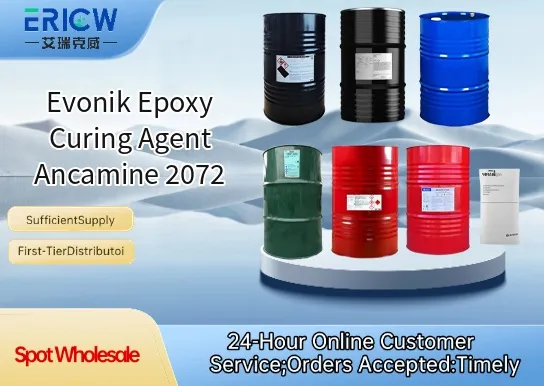
Fast-reacting aliphatic amine curing agent enabling rapid room-temperature cure of epoxy resins.
Low viscosity and excellent compatibility with standard bisphenol-A and bisphenol-F epoxy resins.
Provides outstanding adhesion to metals, concrete, and composites without surface priming.
Low volatility and reduced amine odor compared to conventional aliphatic amines, improving workplace safety.
Delivers high glass transition temperature (Tg) and excellent chemical resistance in cured systems.
Structural adhesives for automotive and aerospace assembly.
High-performance flooring and industrial coatings for concrete substrates.
Electrical encapsulation and potting compounds requiring fast throughput.
Repair mortars and grouts for infrastructure maintenance.
Composite matrix resins for wind blade bonding and tooling applications.
| Chemical Type | Aliphatic polyamine |
| Product Form | Liquid |
| Appearance | Colorless to pale yellow clear liquid |
| Primary Applications | Room-temperature curable structural adhesives, coatings, and composites |
| Key Features | Fast cure, low viscosity, low odor, high Tg |
| Benefits | Improved productivity, enhanced adhesion, reduced VOC exposure |
| Storage Stability | Stable under dry, cool conditions (≤25°C) for ≥12 months in sealed containers |
Q1: What is the primary chemical class and functional mechanism of Ancamine 2072?
A: Ancamine 2072 is a low-viscosity, aliphatic amine-based epoxy curing agent. It functions via nucleophilic addition to epoxide groups, enabling ambient- or elevated-temperature cure of standard bisphenol-A and bisphenol-F epoxy resins without requiring strong accelerators.
Q2: Is Ancamine 2072 suitable for high-performance coating applications such as industrial maintenance or marine coatings?
A: Yes — its combination of fast ambient reactivity, excellent adhesion to metals and concrete, good chemical resistance after full cure, and low blushing tendency makes it well-suited for demanding protective coatings, including tank linings, offshore structures, and heavy-duty floor systems.
Q3: How does Ancamine 2072 compare to traditional DETA or TETA in terms of handling and safety profile?
A: Ancamine 2072 offers significantly lower volatility and reduced skin sensitization potential compared to conventional short-chain aliphatic amines like DETA or TETA. Its higher molecular weight and modified structure contribute to improved workplace handling and lower odor intensity, supporting safer formulation practices.
Q4: Can Ancamine 2072 be used in formulations requiring FDA compliance for indirect food contact?
A: Ancamine 2072 is not pre-approved for direct or indirect food contact under FDA regulations. Formulators seeking food-contact compliance must conduct full system-level evaluation and validation, including extraction testing and regulatory review, as Ancamine 2072 has not been submitted for inclusion in FDA Indirect Food Additives listings.
Contact With Us:
E-mail: wangxingqiang@ericwchem.com
Have a Questions? Call Us:
Add:
Building A1, Jiete Industrial Park, Huangpu District, Guangzhou City, Guangdong Province, China