English
 Español
 tiếng việt
 русский
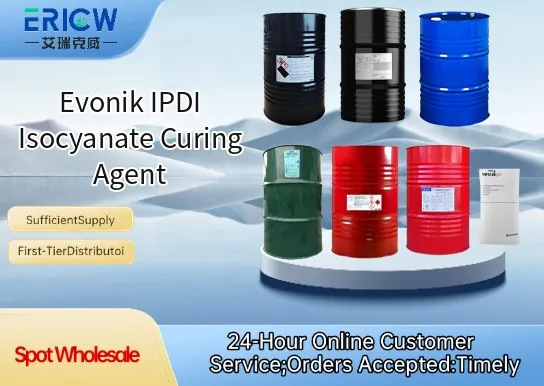
Aliphatic diisocyanate offering excellent UV stability and color retention in demanding coating systems.
Low volatility and reduced vapor pressure compared to aromatic isocyanates, enhancing workplace safety and handling.
High reactivity with polyols and amines, enabling efficient curing at ambient or elevated temperatures.
Excellent compatibility with acrylic, polyester, and polycarbonate polyols for versatile formulation flexibility.
Hydrolytically stable structure minimizes CO₂ generation during storage and processing, improving pot life consistency.
High-performance automotive clearcoats and OEM topcoats requiring long-term gloss and weather resistance.
Industrial maintenance coatings for infrastructure, machinery, and offshore equipment exposed to harsh environments.
UV-resistant plastic coatings for exterior automotive trim, architectural panels, and consumer electronics housings.
Two-component (2K) polyurethane adhesives and sealants used in transportation and construction bonding applications.
Specialty elastomers and castable polyurethane systems where optical clarity and thermal stability are critical.
| Chemical Type | Aliphatic diisocyanate (Isophorone diisocyanate, IPDI) |
| Product Form | Liquid |
| Appearance | Colorless to pale yellow transparent liquid |
| NCO Content (wt %) | 37.0 – 38.5 |
| Viscosity (25 °C, mPa·s) | 1,200 – 1,600 |
| Specific Gravity (20 °C) | 1.19 – 1.22 |
| Storage Stability | Stable under dry, inert conditions at 15–25 °C for ≥12 months |
| Key Features | Aliphatic, low-volatility, UV-stable, hydrolysis-resistant |
Q1: What distinguishes IPDI-based curing agents from other aliphatic isocyanates like HDI or H12MDI?
A: IPDI offers a unique combination of steric hindrance and reactivity due to its bicyclic structure and secondary isocyanate group, resulting in slower gel times and improved pot life compared to HDI trimer, while maintaining excellent UV stability and yellowing resistance typical of aliphatic systems.
Q2: How should this curing agent be handled and stored to maintain performance?
A: Store in tightly sealed containers under dry, inert conditions (e.g., nitrogen blanket) at temperatures between 15–25 °C. Avoid exposure to moisture, heat, or ambient humidity during handling, as IPDI is sensitive to hydrolysis—precautions such as using dry equipment and minimizing air contact are strongly recommended.
Q3: Is this product suitable for high-solids or solvent-free coating formulations?
A: Yes—Evonik IPDI is commonly used in high-solids, low-VOC, and 100% solids polyurethane coatings and adhesives, where its relatively low viscosity and controlled reactivity support formulation flexibility without compromising film formation or crosslink density.
Q4: Can it be used in combination with polyester, acrylic, or polyether polyols?
A: Yes—it exhibits broad compatibility with common hydroxyl-functional resins including polyester, acrylic, and polyether polyols, enabling tailored cure profiles and final film properties such as hardness, flexibility, and chemical resistance.
Contact With Us:
E-mail: wangxingqiang@ericwchem.com
Have a Questions? Call Us:
Add:
Building A1, Jiete Industrial Park, Huangpu District, Guangzhou City, Guangdong Province, China