English
 Español
 tiếng việt
 русский
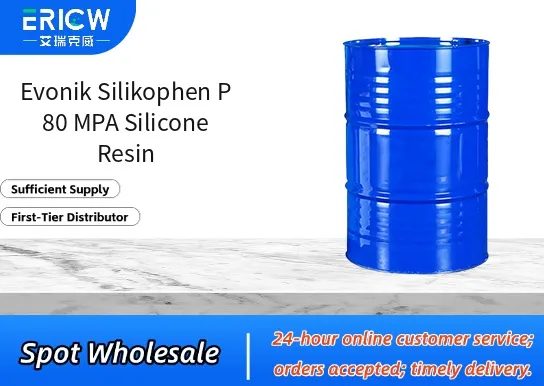
High thermal stability up to 250 °C continuous service temperature.
Excellent electrical insulation properties with low dielectric loss.
Good compatibility with organic resins and pigments for hybrid formulations.
Low volatile content, supporting VOC-compliant coating systems.
Hydrophobic surface character enhancing water repellency and weather resistance.
Heat-resistant coatings for industrial ovens and exhaust systems.
Electrical insulation varnishes for motors, transformers, and coil windings.
Binders in high-performance ceramic and refractory coatings.
Matrix resin in flame-retardant composites for transportation interiors.
Base resin for silicone-modified alkyd and polyester hybrid topcoats.
| Chemical Type | Methyl-phenyl silicone resin |
| Product Form | Clear to slightly yellow liquid |
| Appearance | Homogeneous, low-viscosity solution |
| Solvent Content | Xylene and/or aromatic hydrocarbon blend |
| Solids Content (wt%) | ~80 ± 2% |
| Viscosity (25 °C, mPa·s) | 1,200 – 1,800 (Brookfield RV, spindle #3, 12 rpm) |
| Density (20 °C, g/cm³) | 0.96 – 0.99 |
| Flash Point (PMCC, °C) | ≈ 45 |
Q1: What is the primary function of Silikophen P 80 MPA in coating formulations?
A: Silikophen P 80 MPA is a methyl-phenyl silicone resin designed to enhance thermal stability, weather resistance, and surface hardness in high-performance organic-inorganic hybrid coatings—especially for industrial maintenance, coil coatings, and heat-resistant finishes.
Q2: Is Silikophen P 80 MPA compatible with common organic resins such as acrylics, alkyds, or epoxies?
A: Yes, it demonstrates good compatibility with many thermosetting organic resins when properly dispersed or pre-reacted. Compatibility should be verified experimentally in the final formulation, as performance depends on solvent system, curing conditions, and resin ratios.
Q3: How is Silikophen P 80 MPA typically incorporated into a coating system?
A: It is generally added during the let-down stage as a solution in aromatic or ketonic solvents. Pre-dilution and gradual addition under controlled agitation help ensure uniform dispersion and minimize phase separation.
Q4: Does Silikophen P 80 MPA require a catalyst for condensation curing?
A: While it can undergo moisture-cure condensation, optimal film formation and crosslink density are typically achieved with thermal curing—often in combination with conventional organic crosslinkers (e.g., melamines or blocked isocyanates) or metal-organic catalysts, depending on the formulation design.
Contact With Us:
E-mail: wangxingqiang@ericwchem.com
Have a Questions? Call Us:
Add:
Building A1, Jiete Industrial Park, Huangpu District, Guangzhou City, Guangdong Province, China