English
 Español
 tiếng việt
 русский
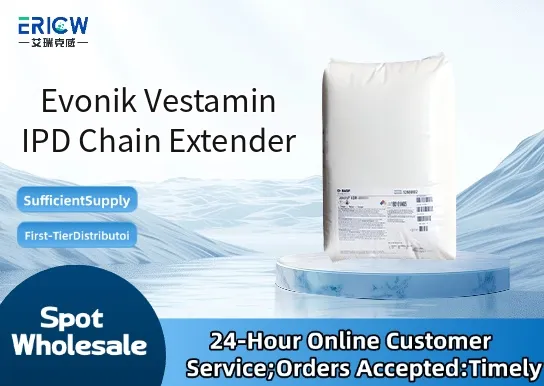
High reactivity with isocyanates enables rapid chain extension and efficient polymer network formation.
Excellent compatibility with aromatic and aliphatic polyisocyanate systems, supporting broad formulation flexibility.
Contributes to enhanced thermal stability and mechanical performance in final polyurethane elastomers and coatings.
Low volatility and favorable handling characteristics support safe industrial processing and reduced VOC emissions.
Consistent batch-to-batch quality ensured by Evonik’s stringent GMP-compliant manufacturing standards.
High-performance thermoplastic polyurethane (TPU) for automotive and industrial components.
Reaction injection molding (RIM) and cast elastomer systems requiring fast demold times and high resilience.
High-solids and solvent-free polyurethane coatings for flooring, marine, and protective applications.
Microcellular polyurethane foams demanding dimensional stability and compression set resistance.
Adhesives and sealants requiring elevated heat resistance and cohesive strength.
| Chemical Type | Isophoronediamine (IPDA)-based aliphatic diamine chain extender |
| Product Form | Liquid |
| Appearance | Clear, pale yellow liquid |
| Primary Applications | Polyurethane elastomers, coatings, adhesives, sealants, and RIM systems |
| Key Features | Aliphatic structure, low color, high functionality, excellent hydrolytic stability |
| Benefits | Improved UV resistance, reduced yellowing, enhanced mechanical properties, processing efficiency |
| Storage Conditions | Store under dry nitrogen; protect from moisture and ambient light at 15–25 °C |
| Handling Precautions | Use in well-ventilated areas; wear chemical-resistant gloves and eye protection |
Q1: What is the primary function of Vestamin IPD in polyurethane systems?
A: Vestamin IPD acts as a chain extender to react with isocyanate-terminated prepolymers, enhancing hard segment formation, improving mechanical strength, thermal stability, and chemical resistance in thermoplastic and cast elastomer polyurethanes.
Q2: How does Vestamin IPD differ from aliphatic diamines like H12MDA or aromatic diamines like MOCA?
A: As an isophorone-based diamine, Vestamin IPD offers a balanced combination of reactivity, steric hindrance, and yellowing resistance—distinct from highly reactive aromatic amines and slower-curing saturated aliphatic alternatives—making it suitable for applications requiring both processing control and long-term UV stability.
Q3: Is Vestamin IPD compatible with moisture-sensitive polyurethane formulations?
A: Yes—Vestamin IPD exhibits lower moisture sensitivity compared to many aliphatic diamines due to its sterically hindered secondary amine structure, allowing more robust handling under ambient conditions and reduced risk of premature side reactions during processing.
Q4: What are typical dosage guidelines when using Vestamin IPD as a chain extender?
A: Dosage depends on formulation requirements and target properties, but it is typically used at low concentrations—generally ranging from 0.1% to 2% by weight relative to the total formulation—to achieve optimal crosslink density without compromising processability or phase separation behavior.
Contact With Us:
E-mail: wangxingqiang@ericwchem.com
Have a Questions? Call Us:
Add:
Building A1, Jiete Industrial Park, Huangpu District, Guangzhou City, Guangdong Province, China