English
 Español
 tiếng việt
 русский
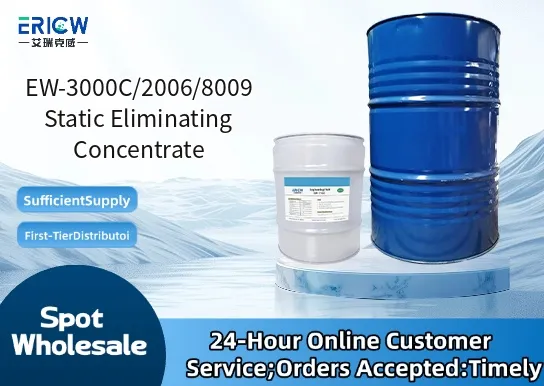
Ultra-low ionic residue formulation minimizes risk of corrosion or contamination in sensitive electronic and optical manufacturing environments.
Non-volatile, water-based concentrate designed for stable long-term performance without solvent evaporation or film re-deposition.
Rapid static decay (<500 ms at 1 kV) under controlled RH (40–60%) when diluted per recommended protocols.
pH-neutral (6.8–7.2) to ensure compatibility with common engineering plastics, coated substrates, and stainless-steel equipment surfaces.
Free of halogens, heavy metals, and intentionally added PFAS compounds — aligned with evolving industrial sustainability standards.
Pre-treatment rinse for semiconductor wafers and photomasks prior to lithography or metrology steps.
Static control additive in precision cleaning formulations for medical device assembly cleanrooms (ISO Class 5–7).
In-line dilution system for high-speed web handling of PET, PP, and PC films in packaging and label converting lines.
Final rinse component in aqueous parts washers used for aerospace components requiring low particulate and electrostatic discharge (ESD) safety.
Formulation base for custom ESD-safe cleaners targeting optical lenses, display glass, and MEMS sensor housings.
| Chemical Type | Non-ionic surfactant blend with synergistic humectants and conductivity enhancers |
| Product Form | Liquid concentrate (ready-to-dilute) |
| Appearance | Clear, pale amber, free of sediment or haze |
| Specific Gravity (25°C) | 1.03 ± 0.02 g/cm³ |
| pH (1% aqueous solution, 25°C) | 6.9–7.1 |
| Primary Applications | ESD control in critical aqueous cleaning, rinsing, and surface conditioning processes |
| Key Features | Low foaming, non-staining, non-corrosive to aluminum and anodized surfaces |
| Regulatory Compliance | REACH compliant; RoHS 2015/863 Annex II (SVHC-free); SDS available upon request |
| Common Compatible Systems | Suitability |
| Modutek Aqueous Batch Cleaners (e.g., QDR, SDR) | Highly Recommended – Fully validated for inline metering and temperature stability up to 75°C |
| Ultrasonics International Ultrasonic Rinse Tanks (30–60 kHz) | Recommended – Requires pre-dilution to ≤0.5% v/v; no cavitation interference observed |
| Alconox® Tergazyme®-based cleaning lines | Suitable – Compatible as post-rinse additive; no enzymatic activity inhibition confirmed |
| Custom-built spray-in-air conveyor rinsers | Highly Recommended – Optimized for low-residue atomization and rapid drying profiles |
Q1: What is the CAS Registry Number for EW-3000C/2006/8009?
A: The product is a proprietary multi-component formulation; individual CAS numbers are not assigned to the concentrate. Full ingredient disclosure (including CAS numbers for all ≥0.1% constituents) is provided in Section 3 of the Safety Data Sheet (SDS).
Q2: What is the typical working concentration range, and how is it measured?
A: Recommended use concentration is 0.1–0.8% v/v in deionized water (1–8 mL per liter). Conductivity measurement (target range: 15–80 μS/cm at 25°C) is the preferred in-process verification method over refractive index due to ionic sensitivity.
Q3: How does EW-3000C/2006/8009 differ from conventional quaternary ammonium (quat)-based antistats?
A: Unlike quat-based products, EW-3000C/2006/8009 relies on non-ionic, hydrophilic film-forming agents that do not migrate or extract under thermal cycling or solvent exposure—eliminating risk of lens hazing, sensor fouling, or downstream ionic contamination.
Q4: Is migration or leaching into polymer substrates a concern during high-humidity storage?
A: No measurable migration occurs into standard engineering thermoplastics (e.g., PC, ABS, PEEK) after 72 hrs at 85% RH/40°C, as verified by FTIR-ATR surface analysis and surface resistivity monitoring.
Q5: Does EW-3000C/2006/8009 meet ISO 10993 or USP <87>/<88> biocompatibility requirements?
A: It is not certified for direct biological contact per ISO 10993 or USP chapters. However, it is widely used in final rinse steps for Class II/III medical devices where residual limits are validated via TOC and conductivity testing per internal PQ protocols.
Contact With Us:
E-mail: wangxingqiang@ericwchem.com
Have a Questions? Call Us:
Add:
Building A1, Jiete Industrial Park, Huangpu District, Guangzhou City, Guangdong Province, China