English
 Español
 tiếng việt
 русский
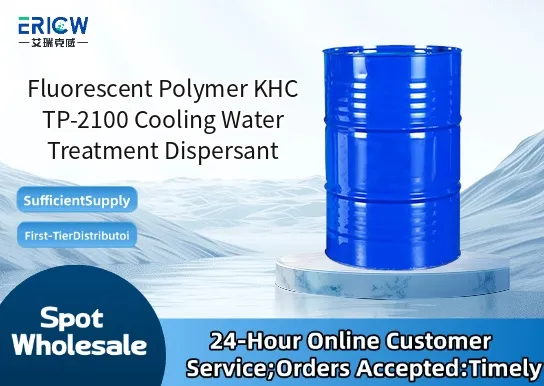
Fluorescent tracer functionality enables real-time, non-invasive monitoring of dispersant concentration and distribution in recirculating cooling systems.
High-performance polyacrylate-based architecture provides exceptional dispersion of calcium carbonate, iron oxide, and colloidal silica at low dosage rates (5–20 ppm).
Thermally stable up to 90 °C and hydrolytically robust across pH 6.0–9.5, ensuring consistent performance under variable operating conditions.
Low-foaming formulation compatible with high-turbidity and high-hardness waters without compromising air release or heat transfer efficiency.
Non-toxic, biodegradable backbone meets OECD 301B screening criteria and carries no GHS hazard classification for aquatic toxicity (EC50 > 100 mg/L, Daphnia magna).
Open recirculating cooling towers in power generation facilities (coal, gas, nuclear).
Industrial process cooling systems in petrochemical refineries and chemical manufacturing plants.
Chilled water systems for large-scale HVAC applications in commercial and institutional buildings.
Once-through and hybrid cooling systems requiring fluorescent traceability for compliance auditing.
Pre-commissioning and commissioning flush treatments to prevent scale nucleation during system startup.
| Chemical Type | Fluorescently labeled sodium polyacrylate copolymer |
| Product Form | Aqueous solution (40 ± 2% active) |
| Appearance | Clear, pale yellow to amber liquid |
| pH (1% aqueous solution) | 8.0 – 9.0 |
| Density (20 °C) | 1.12 – 1.16 g/cm³ |
| Primary Applications | Scale and deposit dispersion in industrial cooling water systems |
| Key Features | Fluorescence excitation/emission: λex 365 nm / λem 440 nm; detectable down to 0.5 ppm |
| Regulatory Compliance | REACH registered; compliant with US EPA Safer Choice Criteria (v2.4); non-PBT/vPvB |
| Common Compatible Systems | Suitability |
| Phosphonate-based corrosion inhibitor programs (e.g., HEDP, ATMP) | Highly Recommended – No antagonism; synergistic dispersion enhancement observed |
| Zinc-free, molybdate-amino triazole (ATA) systems | Recommended – Stable performance; fluorescence unaffected by molybdate |
| Non-oxidizing biocides (e.g., DBNPA, isothiazolinones) | Suitable – No quenching of fluorescence signal; compatible at standard dosages |
| Chlorine and chlorine dioxide oxidizing biocides | Recommended – Stable under intermittent shock dosing; avoid continuous residual > 1.0 ppm free chlorine |
Q1: What is the CAS Registry Number for KHC TP-2100?
A: The CAS Registry Number is 2457832-19-4 (registered for the full fluorescent polymer composition).
Q2: What is the recommended dosage range in a typical cooling tower system?
A: Standard dosage is 8–15 ppm active polymer, adjusted based on cycles of concentration, makeup water hardness (>150 ppm CaCO₃), and heat flux. Fluorescence calibration curves are provided for field meter verification.
Q3: How does KHC TP-2100 differ from conventional non-fluorescent dispersants like polyacrylates (e.g., PAAS)?
A: Unlike standard polyacrylates, KHC TP-2100 incorporates a covalently bound, photostable fluorophore enabling quantitative, interference-resistant concentration tracking—eliminating reliance on indirect methods (e.g., TOC, UV absorbance) that suffer from matrix interference.
Q4: Is KHC TP-2100 subject to extractable/leachable concerns in stainless steel or PVC-lined systems?
A: No significant leaching observed per ASTM D1248 and ISO 10993-12 testing; validated for use with 316 SS, CPVC, and HDPE piping. Fluorophore remains polymer-bound with no measurable free dye migration (<0.02 ppm) after 120-day static exposure.
Q5: Does KHC TP-2100 require special handling or regulatory reporting under TSCA or EU CLP?
A: Listed on TSCA Inventory (Active); exempt from CLP classification as it carries no hazard pictograms, signal word, or mandatory SDS hazard statements per Annex I, Regulation (EC) No 1272/2008.
Contact With Us:
E-mail: wangxingqiang@ericwchem.com
Have a Questions? Call Us:
Add:
Building A1, Jiete Industrial Park, Huangpu District, Guangzhou City, Guangdong Province, China