English
 Español
 tiếng việt
 русский
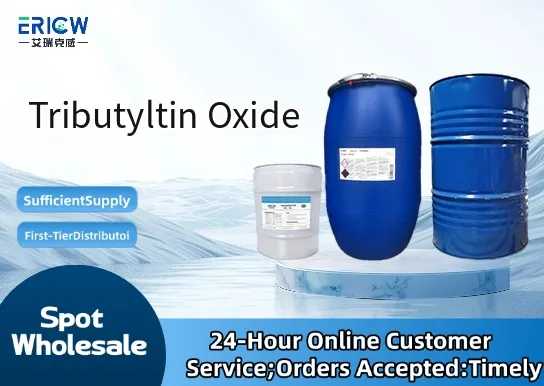
Highly effective biocide with broad-spectrum activity against fungi, bacteria, and algae.
Thermally stable up to 200 °C, enabling incorporation into high-temperature polymer processing.
Low volatility and minimal leaching in properly formulated matrices, supporting long-term efficacy.
Excellent compatibility with PVC, polyolefins, and silicone-based elastomers.
Acts as both a biostatic and biocidal agent, inhibiting microbial growth and preventing biofilm formation.
Antifouling additives in marine coatings for ship hulls and offshore structures.
Biocontrol agent in industrial water treatment systems (e.g., cooling towers, paper mill process water).
Preservative in PVC-based construction materials, including sealants, adhesives, and roofing membranes.
Fungistatic component in wood preservatives for non-residential outdoor applications.
Stabilizer and antimicrobial co-additive in silicone rubber used for HVAC gaskets and medical device housings.
| Chemical Type | Organotin compound (triorganotin oxide) |
| CAS Number | 56-36-0 |
| Product Form | White to off-white crystalline powder |
| Appearance | Free-flowing, odorless solid |
| Melting Point | 105–115 °C (decomposes above 180 °C) |
| Purity (by GC) | ≥ 97.0% |
| Primary Applications | Antifouling, industrial biocide, polymer preservative |
| Regulatory Compliance | REACH registered; not authorized for consumer biocidal products under EU BPR |
| Common Compatible Systems | Suitability |
| Polyvinyl Chloride (PVC) compounds | Highly Recommended – Excellent dispersion and thermal stability during extrusion/calendering |
| Silicone elastomers (HTV & RTV) | Recommended – Stable below 150 °C; enhances resistance to mold in humid environments |
| Solvent-based marine antifouling paints | Highly Recommended – Maintains biocidal activity and film integrity in epoxy and chlorinated rubber binders |
| Aqueous industrial coolant formulations | Suitable – Requires pH control (7.5–9.0) and chelant stabilization to minimize hydrolysis |
Q1: What is the CAS number for Tributyltin Oxide?
A: The CAS Registry Number for Tributyltin Oxide is 56-36-0.
Q2: What is the typical loading range when using Tributyltin Oxide in PVC formulations?
A: Standard dosage ranges from 0.2 to 1.0 phr (parts per hundred resin), depending on end-use requirements and regulatory constraints.
Q3: How does Tributyltin Oxide compare to newer alternatives like silver zeolites or isothiazolinones?
A: Tributyltin Oxide offers superior longevity and thermal resilience but faces stricter regulatory restrictions; alternatives provide lower ecotoxicity yet may lack equivalent persistence in harsh environments.
Q4: Is Tributyltin Oxide subject to migration or extraction in aqueous contact scenarios?
A: Yes — hydrolysis can occur in acidic or highly alkaline water, releasing Bu₃Sn⁺ species; formulation with hydrophobic resins and pH buffering significantly reduces extractable tin.
Contact With Us:
E-mail: wangxingqiang@ericwchem.com
Have a Questions? Call Us:
Add:
Building A1, Jiete Industrial Park, Huangpu District, Guangzhou City, Guangdong Province, China