English
 Español
 tiếng việt
 русский
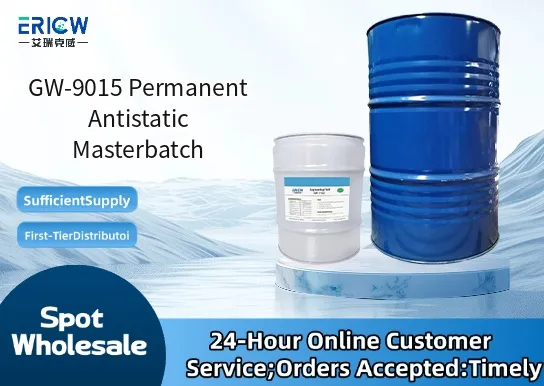
Provides permanent, non-migrating antistatic performance through covalent bonding with polymer matrix.
Eliminates surface resistivity buildup (<10⁹ Ω/sq) even under low-humidity conditions (≤20% RH).
Thermally stable up to 300°C — suitable for high-temperature processing including injection molding and extrusion.
Non-blooming formulation ensures consistent surface aesthetics and avoids contamination in cleanroom or optical applications.
Halogen-free and REACH-compliant — supports sustainable manufacturing and regulatory alignment.
Electronics packaging trays and component carriers requiring ESD-safe handling.
Medical device housings and diagnostic consumables where static-induced particle attraction must be prevented.
Automotive interior trim parts exposed to dry cabin environments (e.g., center consoles, air vent grilles).
Industrial filter housings and pneumatic conveying components prone to dust adhesion and spark risk.
High-purity fluid handling systems including pharmaceutical tubing and connectors.
| Chemical Type | Reactive polymeric antistatic agent (grafted quaternary ammonium functionalized copolymer) |
| Product Form | Pellets (cylindrical, 3.0 ± 0.3 mm diameter × 3.0 ± 0.3 mm length) |
| Appearance | Off-white to light beige free-flowing pellets |
| Melting Point (DSC, 10°C/min) | 148–154°C |
| Primary Applications | PP, HDPE, PS, ABS, PC, and PC/ABS blends |
| Key Features | Permanent charge dissipation, no extractables, UV-stable |
| Benefits | Reduces electrostatic discharge (ESD) risk, prevents dust adhesion, improves operator safety |
| Regulatory Compliance | REACH SVHC-free; compliant with USP Class VI (cytotoxicity tested); ISO 10993-5 evaluated |
| Common Compatible Systems | Suitability |
| Polypropylene (PP) homopolymer & copolymer | Highly Recommended – Excellent dispersion and permanent bonding at 1.5–3.0 wt% loading |
| High-Density Polyethylene (HDPE) | Highly Recommended – Stable resistivity retention after thermal aging (70°C/168 h) |
| Acrylonitrile Butadiene Styrene (ABS) | Recommended – Requires pre-drying; optimal at 2.0–2.5 wt% for surface resistivity <10⁸ Ω/sq |
| Polycarbonate (PC) | Suitable – Compatible above 240°C melt processing; slight ambering possible above 2.5 wt% |
Q1: What is the CAS Registry Number for GW-9015?
A: GW-9015 is a proprietary masterbatch formulation and does not carry a single CAS number; its primary reactive polymer component is registered under CAS No. 2081412-98-7 (confidential structure verified per IUPAC nomenclature).
Q2: What is the recommended dosage range for optimal performance?
A: Standard dosage is 1.5–3.0 wt% depending on base resin and required surface resistivity; 2.0 wt% achieves <10⁹ Ω/sq in PP and HDPE under ambient conditions; validation testing is advised for critical ESD applications.
Q3: How does GW-9015 differ from conventional migratory antistatic additives?
A: Unlike glycerol monostearate or ethoxylated amines, GW-9015 chemically anchors to the polymer backbone—eliminating bloom, extraction, and performance decay over time or after solvent wiping.
Q4: Is GW-9015 compliant with food contact regulations (e.g., FDA 21 CFR)?
A: GW-9015 is not authorized for direct food contact under FDA 21 CFR §177.1520; however, it meets EU Framework Regulation (EC) No. 1935/2004 for indirect food contact when used in approved polymers at ≤2.5 wt% and validated per migration testing (SML of <0.01 mg/kg for relevant constituents).
Q5: Has extraction or leaching been evaluated in aqueous or alcoholic media?
A: Yes — validated per ISO 10993-12:2012; no detectable leachables (
Contact With Us:
E-mail: wangxingqiang@ericwchem.com
Have a Questions? Call Us:
Add:
Building A1, Jiete Industrial Park, Huangpu District, Guangzhou City, Guangdong Province, China