English
 Español
 tiếng việt
 русский
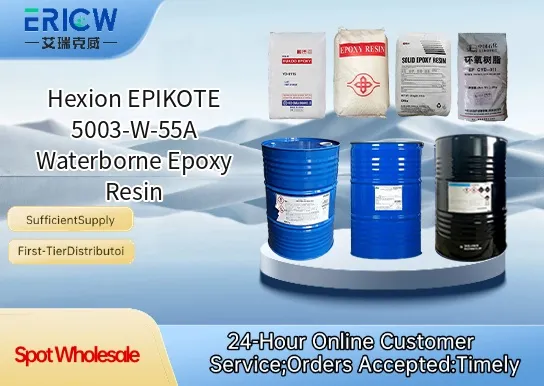
Low-VOC, waterborne formulation compliant with stringent environmental regulations including EPA and EU REACH.
Excellent chemical resistance to alkalis, solvents, and mild acids after full cure.
Superior adhesion to concrete, steel, and galvanized substrates without primer.
Fast ambient-cure capability enabling rapid recoat and reduced downtime in industrial maintenance.
Stable dispersion with low viscosity for easy mixing, spraying, and brush/roller application.
Water-based epoxy primers and topcoats for industrial concrete flooring systems.
Corrosion-resistant coatings for above-ground steel infrastructure and storage tanks.
High-performance maintenance coatings for food processing and pharmaceutical facility surfaces.
Low-emission protective coatings for parking structures and transportation hubs.
Base resin for formulating two-component (2K) waterborne epoxy mortars and grouts.
| Chemical Type | Bisphenol-A based waterborne epoxy dispersion |
| Product Form | Liquid dispersion |
| Appearance | Opaque white to off-white liquid |
| Solids Content (wt%) | 52–56% |
| pH | 7.5–8.5 |
| Viscosity (Brookfield, #2 spindle, 20 rpm, 25°C) | 1,500–3,500 cP |
| Density (25°C) | 1.04–1.07 g/cm³ |
| Free Bisphenol-A | < 10 ppm |
Q1: What is the primary function of EPIKOTE 5003-W-55A in waterborne coating systems?
A: EPIKOTE 5003-W-55A serves as a reactive epoxy resin dispersion designed to enhance crosslink density, chemical resistance, and adhesion in waterborne two-component (2K) epoxy coatings—particularly for industrial maintenance, protective linings, and high-performance floor systems.
Q2: Is EPIKOTE 5003-W-55A compatible with common amine-based hardeners used in waterborne epoxy systems?
A: Yes—it is formulated for compatibility with a range of water-dispersible aliphatic and cycloaliphatic polyamine hardeners. Optimal performance requires matching the resin’s equivalent weight and particle size characteristics with the selected hardener’s reactivity and dispersion stability.
Q3: How does the waterborne nature of this resin affect film formation and cure behavior compared to solventborne epoxy resins?
A: As a stable aqueous dispersion, EPIKOTE 5003-W-55A enables lower VOC formulations and improved workplace safety, but requires careful control of ambient temperature and humidity during application and cure to ensure proper coalescence and crosslink development. Drying and initial cure may be slower than solventborne counterparts, especially under cool or high-humidity conditions.
Q4: Can EPIKOTE 5003-W-55A be used in food-contact or potable water applications?
A: While the resin is designed for low-VOC, high-performance protective coatings, its suitability for food-contact or potable water applications depends on full system formulation—including hardener, additives, and final cured film testing—against relevant regulatory requirements. End-use compliance must be verified by the formulator through appropriate third-party evaluation.
Contact With Us:
E-mail: wangxingqiang@ericwchem.com
Have a Questions? Call Us:
Add:
Building A1, Jiete Industrial Park, Huangpu District, Guangzhou City, Guangdong Province, China