English
 Español
 tiếng việt
 русский
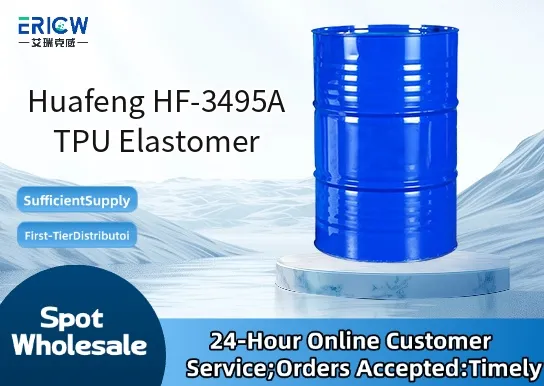
Excellent abrasion resistance for demanding mechanical environments.
Outstanding oil and grease resistance suitable for industrial lubricant exposure.
Good low-temperature flexibility down to –30 °C without significant stiffness increase.
High tensile strength and elongation at break for dynamic, load-bearing applications.
Compatible with common thermoplastic processing methods including extrusion and injection molding.
Industrial hoses and pneumatic tubing requiring pressure resilience and kink resistance.
Roller covers and conveyor belts in material handling systems.
Seals and gaskets for hydraulic and pneumatic equipment.
Protective sheathing for cables and wires exposed to mechanical stress.
Custom-molded components for automotive interior trim and under-hood non-structural parts.
| Chemical Type | Aliphatic polyester-based thermoplastic polyurethane |
| Product Form | Pellets (free-flowing, uniform size) |
| Appearance | Off-white to light amber translucent granules |
| Primary Applications | Extruded profiles, molded seals, flexible industrial tubing |
| Key Features | Abrasion resistance, oil resistance, low-temperature flexibility |
| Processing Temperature Range | 180–220 °C (recommended melt zone) |
| Density (g/cm³) | 1.18–1.22 (ASTM D792) |
| Melt Flow Index (g/10 min) | 10–14 (at 210 °C, 2.16 kg) |
Q1: What are the key processing advantages of HF-3495A compared to conventional TPU grades?
A: HF-3495A offers enhanced melt flow stability and reduced torque demand during extrusion and injection molding, enabling smoother processing at lower temperatures and shorter cycle times. Its optimized thermal profile helps minimize degradation risk in heat-sensitive applications.
Q2: Is HF-3495A suitable for overmolding onto rigid substrates like ABS or PC?
A: Yes, HF-3495A demonstrates strong interfacial adhesion to common engineering thermoplastics including ABS and polycarbonate when processed under standard overmolding conditions—proper mold temperature control and substrate preheating are recommended to maximize bond integrity.
Q3: How does HF-3495A perform in dynamic mechanical applications requiring repeated flexing or impact resilience?
A: Designed with balanced hard-segment dispersion and soft-segment mobility, HF-3495A delivers excellent fatigue resistance and long-term elasticity retention under cyclic stress—making it well-suited for components such as wearable device housings, flexible connectors, and sports equipment parts.
Q4: Can HF-3495A be used in applications requiring low-temperature flexibility?
A: Yes, HF-3495A maintains good elastomeric behavior down to approximately −30 °C, retaining pliability and impact performance in cold environments—ideal for outdoor gear, automotive interior trim, and industrial seals exposed to seasonal temperature variation.
Contact With Us:
E-mail: wangxingqiang@ericwchem.com
Have a Questions? Call Us:
Add:
Building A1, Jiete Industrial Park, Huangpu District, Guangzhou City, Guangdong Province, China